
Ceremonial Wear
A hand-woven prayer of protection.
Created by Mamitas across different Andean regions, these pieces carry sacred symbology and ancestral meaning. From chumpis worn at the navel for energetic protection, to mantas, ponchos and ceremonial dresses, each textile holds story, identity, and relationship to the land. These are not fashion pieces, but garments traditionally worn in prayer, ceremony, and daily life by those walking a path of remembrance.
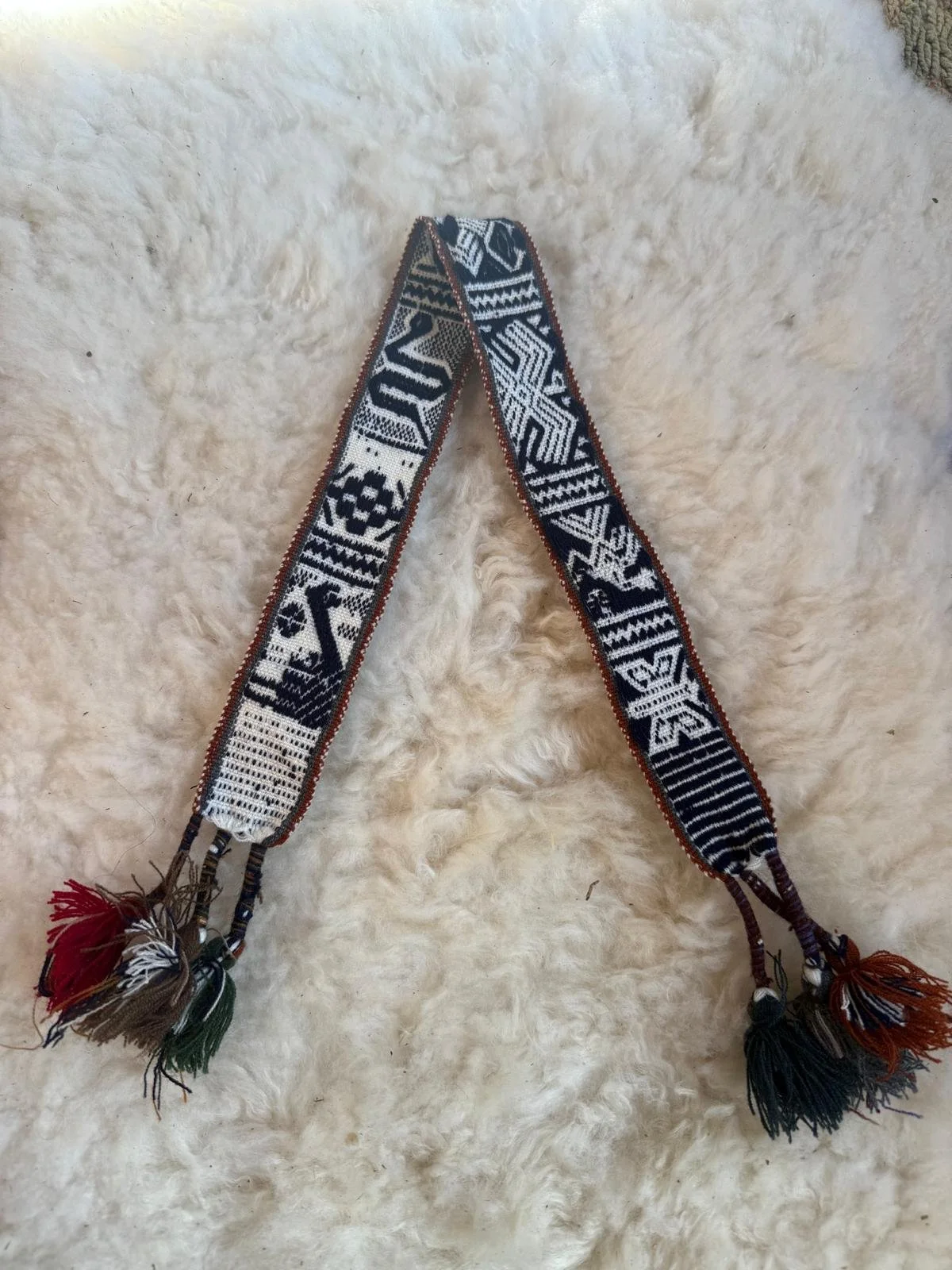
Traditional Andean Hat Band - Cintilla / Watana
Handwoven in the high Andes near Ocongate, in the shadow of the sacred Ausangate Mountain, these traditional hat bands carry the vibrant beadwork, symbolism, and weaving traditions the region is known for.
Worn traditionally around Andean hats, cintillas are far more than decorative adornments. They are expressions of identity, lineage, protection, and relationship with the mountains and ancestral traditions of the Andes.
Within the woven patterns, sacred Andean symbolism is often carried through the designs.
Depending on the piece, motifs include:
- The Condor
- The Butterfly
- The Hummingbird
- The Llama
- The Heart of Mother Earth
- Flowers
- The Puma
- The Snake
- The Serpent
For the peoples of the Ausangate region, these patterns are not simply aesthetic.
They carry memory.
Prayer.
Relationship.
The mountains, animals, rivers, and spirit world are woven directly into the textile language of the Andes.
Traditionally worn around ceremonial and everyday hats, these cintillas are believed to support grounding, clarity, protection, and connection while walking through life and ceremony.
Each piece is individually handmade and carries slight variations in weaving, beadwork, symbolism, and colour.
No two are exactly alike.
These are not factory-made adornments.
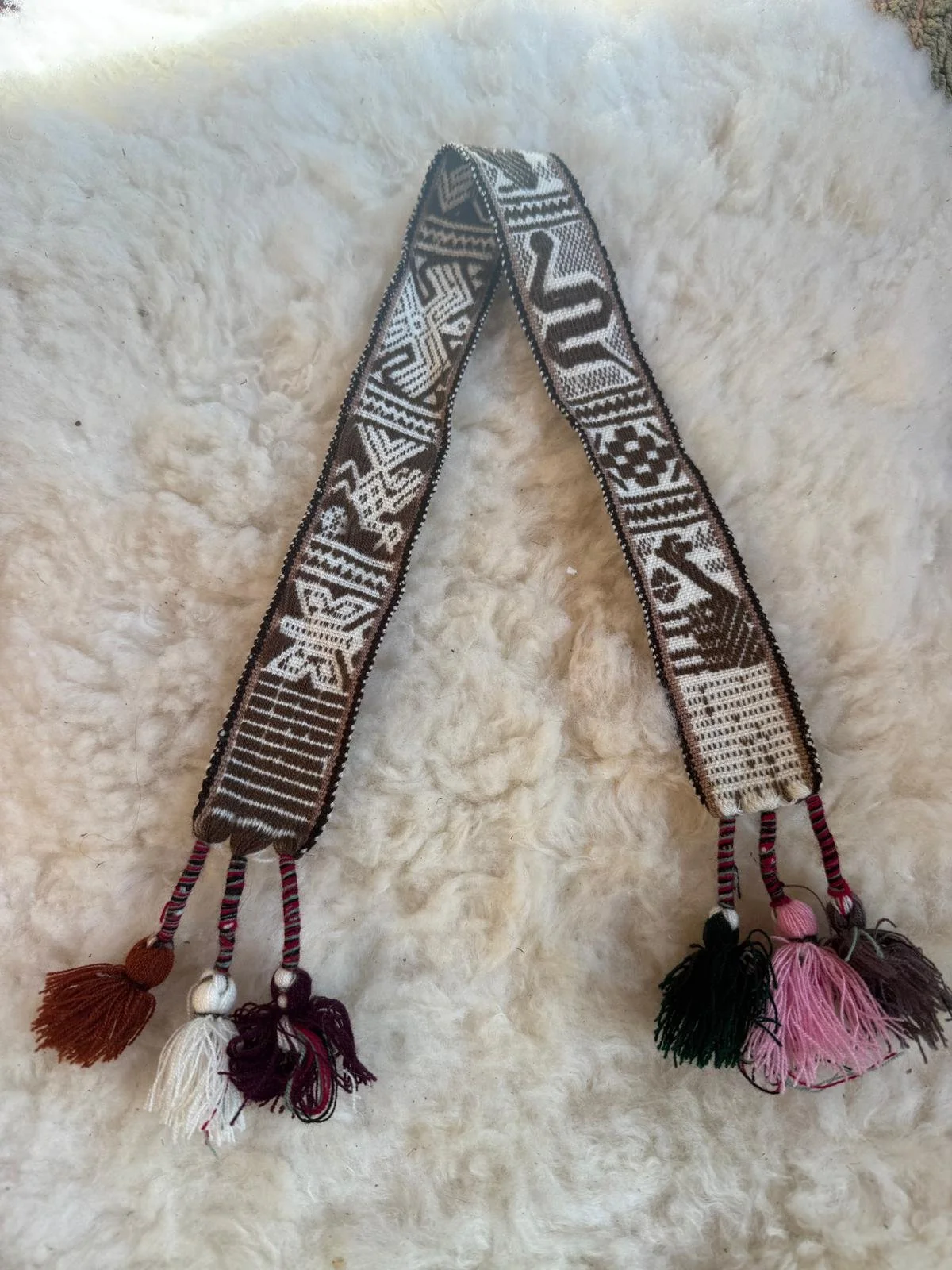
Traditional Andean Hat Band - Cintilla / Watana
Handwoven in the high Andes near Ocongate, in the shadow of the sacred Ausangate Mountain, these traditional hat bands carry the vibrant beadwork, symbolism, and weaving traditions the region is known for.
Worn traditionally around Andean hats, cintillas are far more than decorative adornments. They are expressions of identity, lineage, protection, and relationship with the mountains and ancestral traditions of the Andes.
Within the woven patterns, sacred Andean symbolism is often carried through the designs.
Depending on the piece, motifs include:
- The Condor
- The Butterfly
- The Hummingbird
- The Llama
- The Heart of Mother Earth
- Flowers
- The Puma
- The Snake
- The Serpent
For the peoples of the Ausangate region, these patterns are not simply aesthetic.
They carry memory.
Prayer.
Relationship.
The mountains, animals, rivers, and spirit world are woven directly into the textile language of the Andes.
Traditionally worn around ceremonial and everyday hats, these cintillas are believed to support grounding, clarity, protection, and connection while walking through life and ceremony.
Each piece is individually handmade and carries slight variations in weaving, beadwork, symbolism, and colour.
No two are exactly alike.
These are not factory-made adornments.
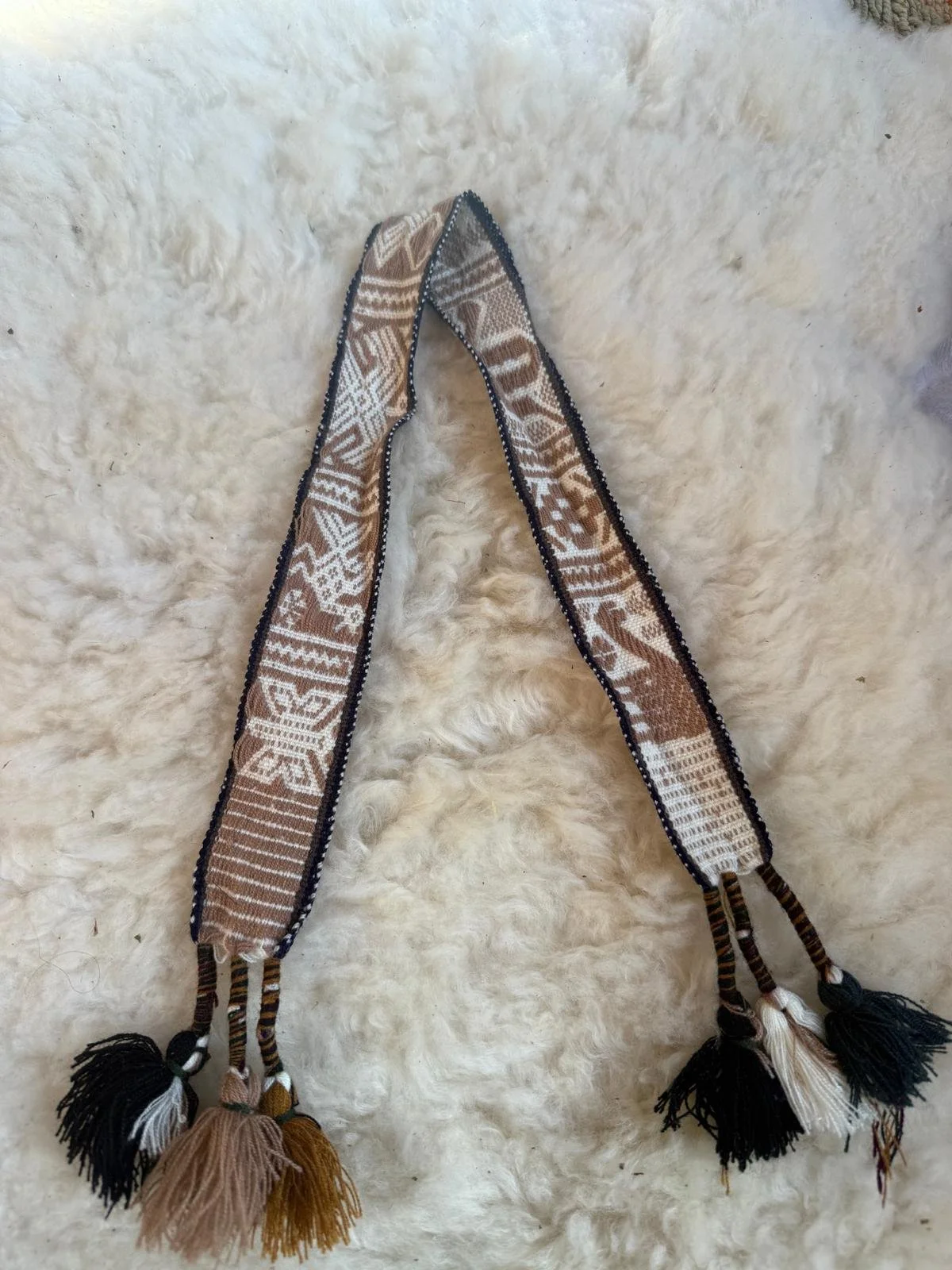
Traditional Andean Hat Band - Cintilla / Watana
Handwoven in the high Andes near Ocongate, in the shadow of the sacred Ausangate Mountain, these traditional hat bands carry the vibrant beadwork, symbolism, and weaving traditions the region is known for.
Worn traditionally around Andean hats, cintillas are far more than decorative adornments. They are expressions of identity, lineage, protection, and relationship with the mountains and ancestral traditions of the Andes.
Within the woven patterns, sacred Andean symbolism is often carried through the designs.
Depending on the piece, motifs include:
- The Condor
- The Butterfly
- The Hummingbird
- The Llama
- The Heart of Mother Earth
- Flowers
- The Puma
- The Snake
- The Serpent
For the peoples of the Ausangate region, these patterns are not simply aesthetic.
They carry memory.
Prayer.
Relationship.
The mountains, animals, rivers, and spirit world are woven directly into the textile language of the Andes.
Traditionally worn around ceremonial and everyday hats, these cintillas are believed to support grounding, clarity, protection, and connection while walking through life and ceremony.
Each piece is individually handmade and carries slight variations in weaving, beadwork, symbolism, and colour.
No two are exactly alike.
These are not factory-made adornments.
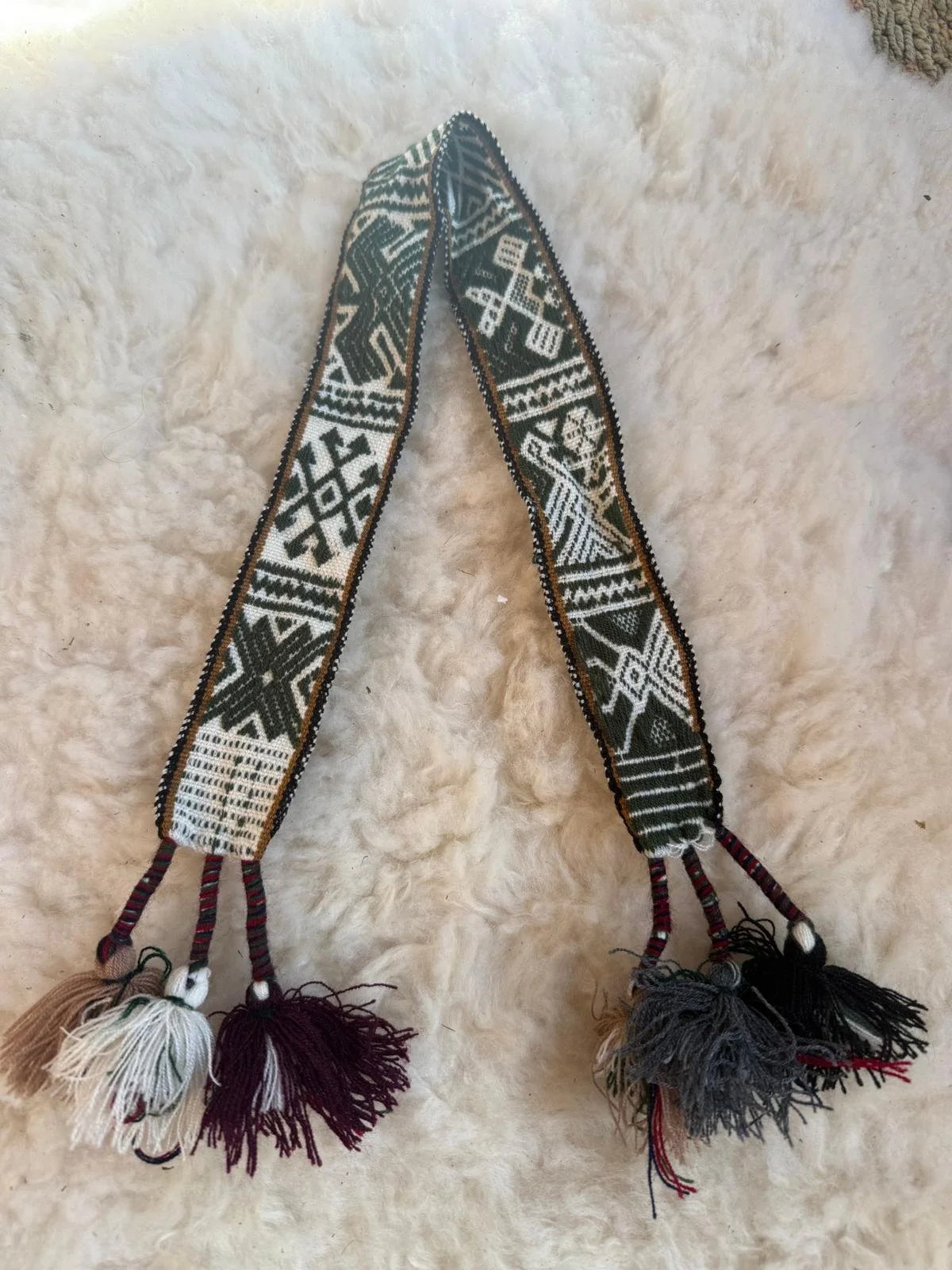
Traditional Andean Hat Band - Cintilla / Watana
Handwoven in the high Andes near Ocongate, in the shadow of the sacred Ausangate Mountain, these traditional hat bands carry the vibrant beadwork, symbolism, and weaving traditions the region is known for.
Worn traditionally around Andean hats, cintillas are far more than decorative adornments. They are expressions of identity, lineage, protection, and relationship with the mountains and ancestral traditions of the Andes.
Within the woven patterns, sacred Andean symbolism is often carried through the designs.
Depending on the piece, motifs include:
- The Condor
- The Butterfly
- The Hummingbird
- The Llama
- The Heart of Mother Earth
- Flowers
- The Puma
- The Snake
- The Serpent
For the peoples of the Ausangate region, these patterns are not simply aesthetic.
They carry memory.
Prayer.
Relationship.
The mountains, animals, rivers, and spirit world are woven directly into the textile language of the Andes.
Traditionally worn around ceremonial and everyday hats, these cintillas are believed to support grounding, clarity, protection, and connection while walking through life and ceremony.
Each piece is individually handmade and carries slight variations in weaving, beadwork, symbolism, and colour.
No two are exactly alike.
These are not factory-made adornments.
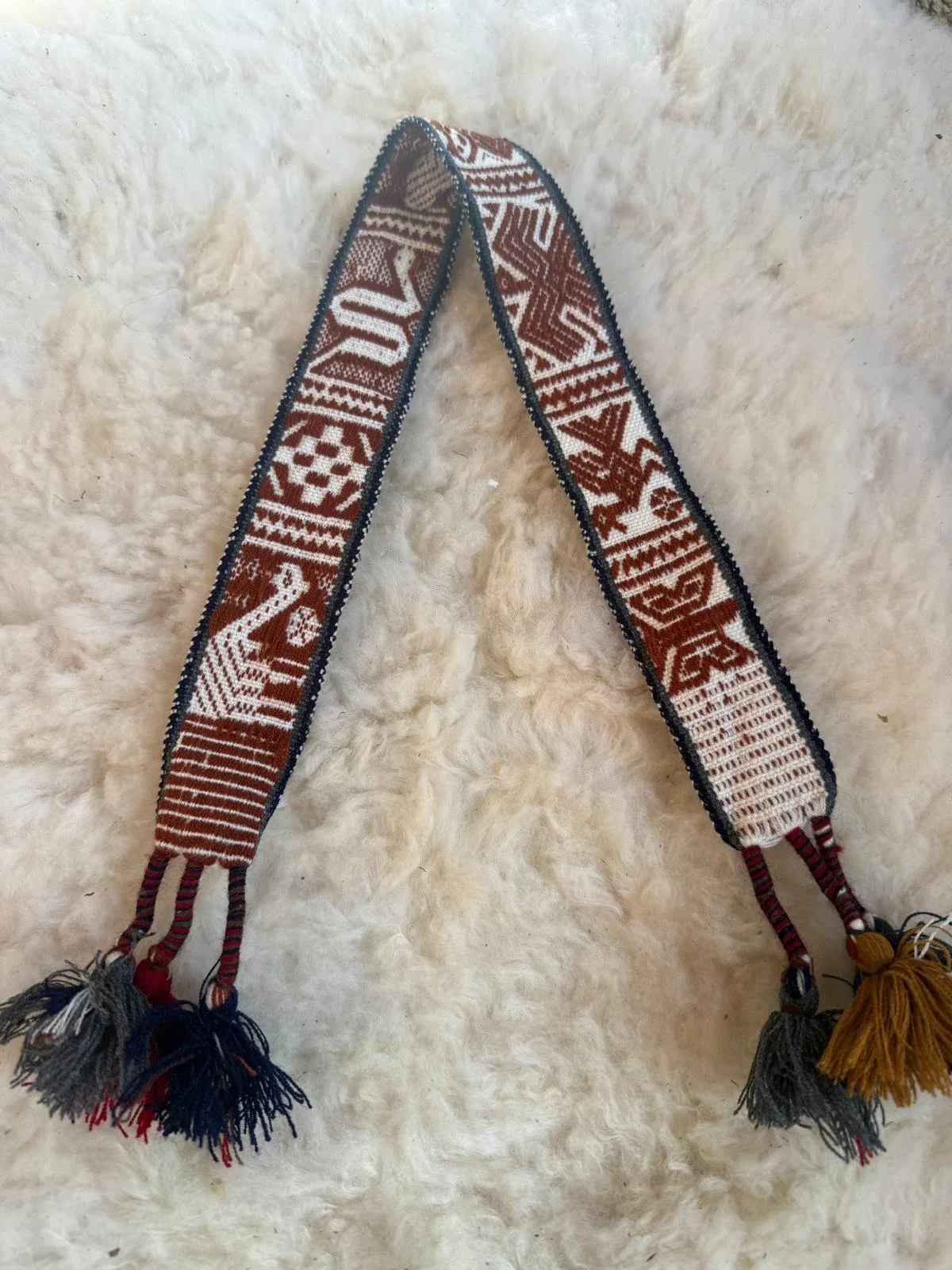
Traditional Andean Hat Band - Cintilla / Watana
Handwoven in the high Andes near Ocongate, in the shadow of the sacred Ausangate Mountain, these traditional hat bands carry the vibrant beadwork, symbolism, and weaving traditions the region is known for.
Worn traditionally around Andean hats, cintillas are far more than decorative adornments. They are expressions of identity, lineage, protection, and relationship with the mountains and ancestral traditions of the Andes.
Within the woven patterns, sacred Andean symbolism is often carried through the designs.
Depending on the piece, motifs include:
- The Condor
- The Butterfly
- The Hummingbird
- The Llama
- The Heart of Mother Earth
- Flowers
- The Puma
- The Snake
- The Serpent
For the peoples of the Ausangate region, these patterns are not simply aesthetic.
They carry memory.
Prayer.
Relationship.
The mountains, animals, rivers, and spirit world are woven directly into the textile language of the Andes.
Traditionally worn around ceremonial and everyday hats, these cintillas are believed to support grounding, clarity, protection, and connection while walking through life and ceremony.
Each piece is individually handmade and carries slight variations in weaving, beadwork, symbolism, and colour.
No two are exactly alike.
These are not factory-made adornments.
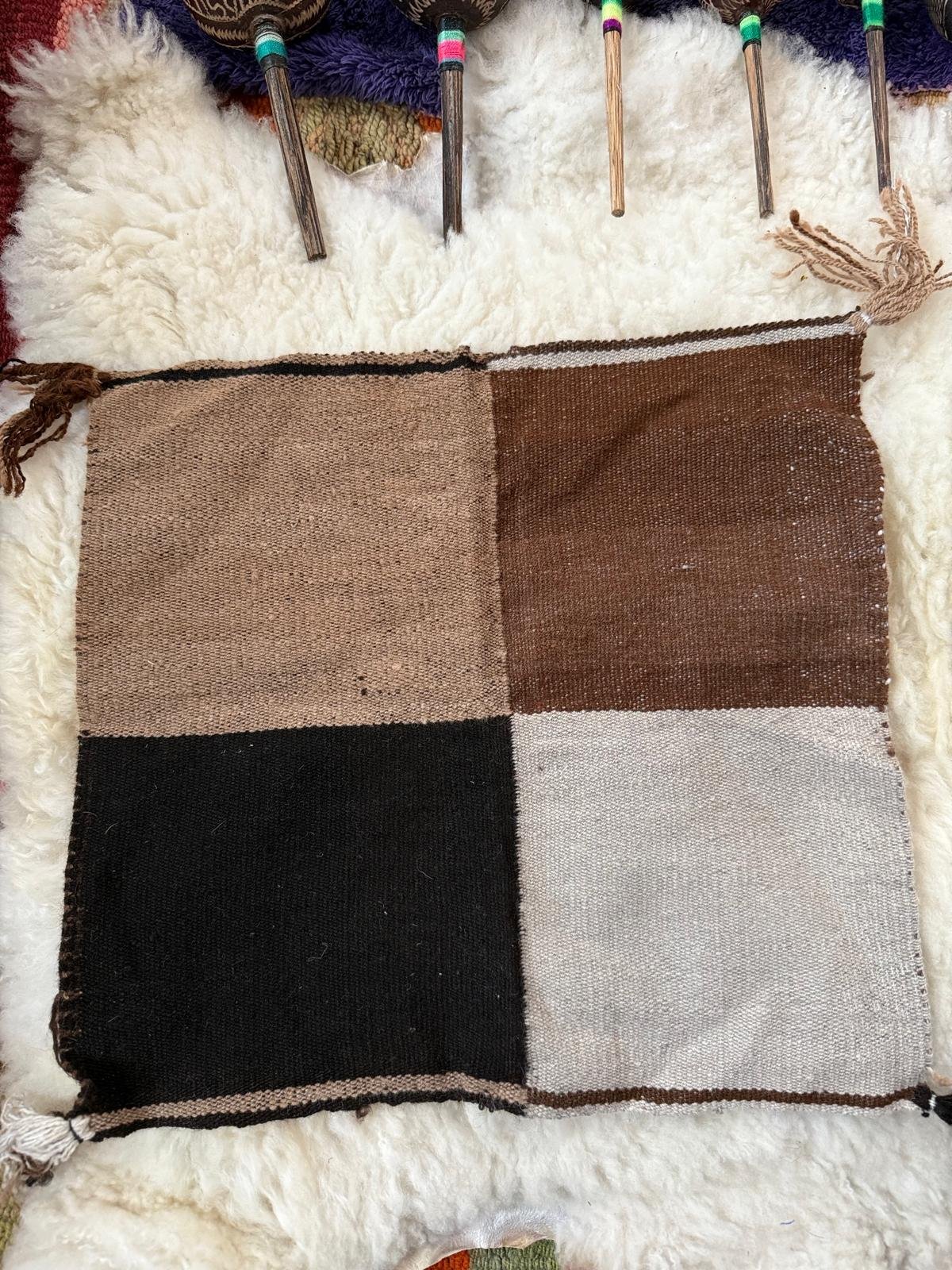
Q’ero Four Elements Mestana / Tawa Altar Cloth
Handwoven near Ocongate in the Peruvian Andes, close to the sacred Ausangate Mountain, these traditional altar cloths embody the Andean principle of Tawa; the sacred “four.”
For the Q’ero peoples and surrounding mountain communities, Ausangate is far more than a mountain. It is an Apu a living spirit, protector, teacher, and powerful presence within Andean ceremonial life.
Within Andean cosmology, life is understood through relationship and balance.
The four directions.
The four elements.
The four regions of the Andean world.
Tawa represents wholeness; a field where all aspects of life exist in right relationship with one another.
These textiles are woven slowly and traditionally using ancestral methods passed down through generations.
The wool is gathered from alpacas raised within the mountain communities themselves, then hand-spun and naturally dyed using plants, minerals, and seeds from the Andes before being woven into these ceremonial pieces.
Every thread carries time, care, and lineage.
Traditionally, textiles of this kind are used as:
Mesa or altar cloths
Despacho foundations
Ceremonial textiles
Sacred carrying cloths
Prayer and meditation spaces
Simple in appearance, yet deeply intentional in symbolism and energy.
Traditional Significance
Represents the four directions and sacred balance
Connected to the wisdom of Tawantinsuyu; the four regions of the Andean world
Reflects harmony, integration, and ayni (right relationship)
Handwoven by Q’ero artisans using traditional methods
These are not mass-produced textiles.
They are woven prayers from the mountains of Peru carrying the stillness, warmth, and spirit of the Andes into the spaces they enter.
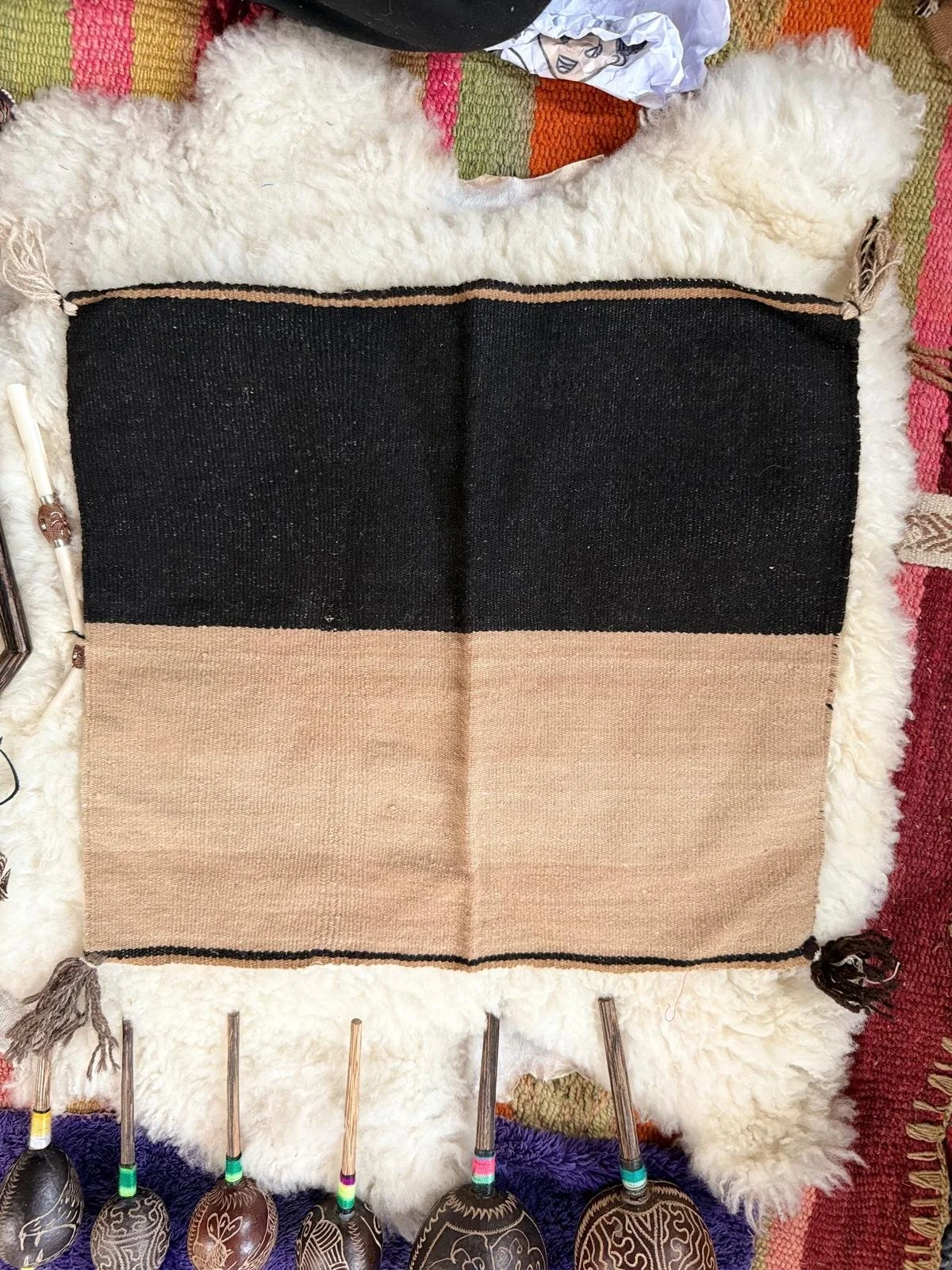
Q’ero Duality Mestana / Unkuna Altar Cloth
Handwoven in the high Andes near Ocongate, Peru, by families connected to the Q’ero traditions, communities living in the shadow of the sacred Ausangate Mountain, one of the most revered Apus (mountain spirits) within Andean cosmology.
Widely regarded as descendants of the Inka lineage and keepers of ancient Andean wisdom traditions, the Q’ero people continue to carry weaving, ceremony, and relationship with the mountains as part of daily life.
Within Q’ero tradition, weaving is far more than craft.
It is memory.
Prayer.
Relationship with the land and the Apus.
This traditional Unkuna ceremonial cloth expresses the Andean principle of Yanantin, sacred duality and complementary relationship.
Black and white.
Light and shadow.
Feminine and masculine.
Earth and sky.
Not opposing forces…
but energies existing in relationship and balance with one another.
Traditionally, an Unkuna is used to carry sacred items:
Coca leaves
Despacho offerings
Ceremonial tools
Personal medicine objects
It becomes a woven holding space for prayer and intention.
Each piece is handmade slowly from beginning to end.
The wool is gathered traditionally, hand-spun, naturally dyed using plants and seeds from the region, and woven using ancestral techniques carried through generations of Q’ero families.
These textiles are considered among the closest living expressions of traditional Inka weaving methods still alive today.
Use
Beautiful as:
Personal altar or mesa cloth
Despacho base
Sacred carrying cloth
Wall hanging
Ceremonial textile
Meditation or prayer space
These are not decorative imitations.
They are living traditional textiles carrying the spirit, symbolism, and mountain lineage of the Andes.
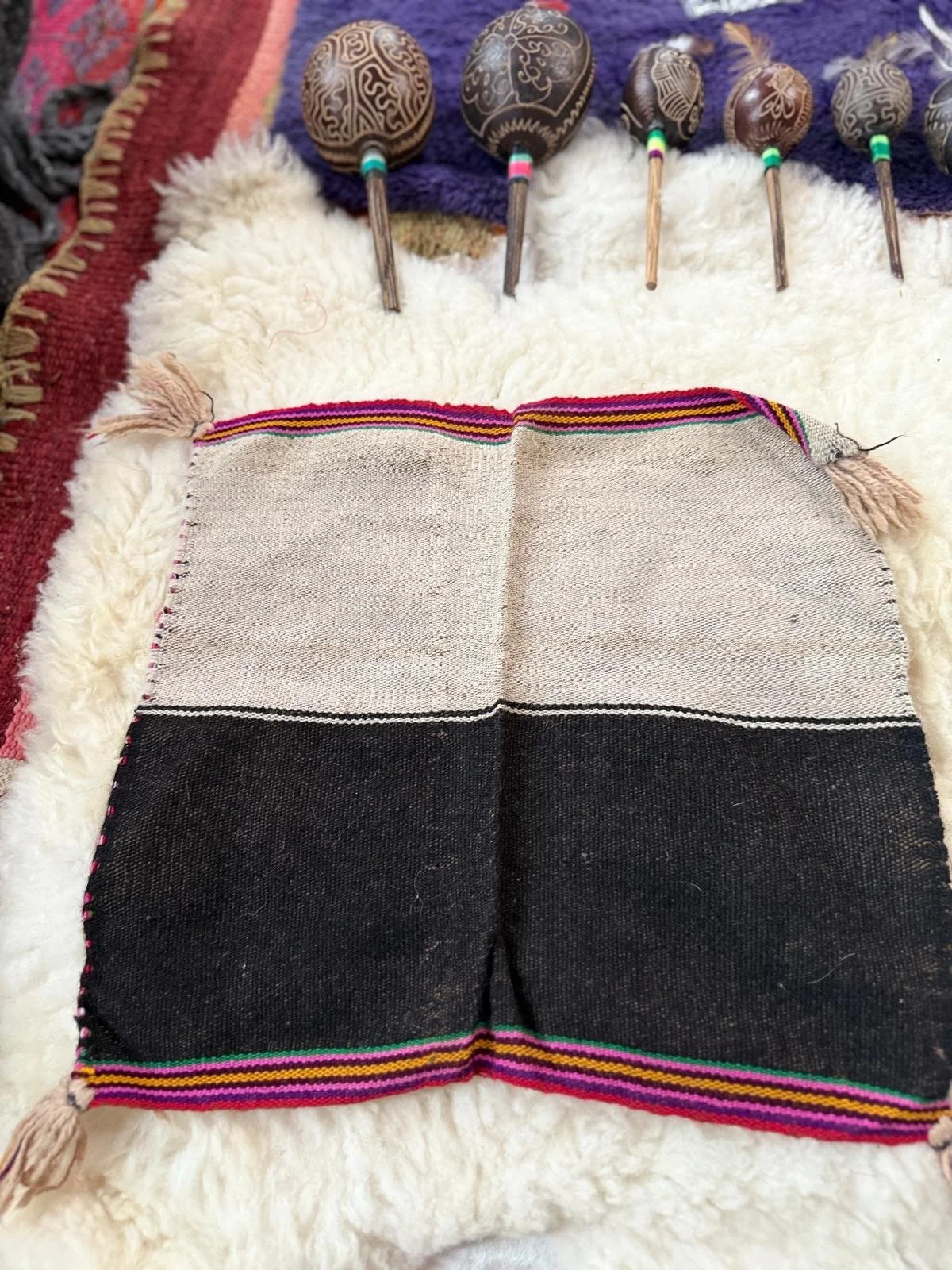
Q’ero Duality Mestana / Unkuna Altar Cloth
Handwoven in the high Andes near Ocongate, Peru, by families connected to the Q’ero traditions, communities living in the shadow of the sacred Ausangate Mountain, one of the most revered Apus (mountain spirits) within Andean cosmology.
Widely regarded as descendants of the Inka lineage and keepers of ancient Andean wisdom traditions, the Q’ero people continue to carry weaving, ceremony, and relationship with the mountains as part of daily life.
Within Q’ero tradition, weaving is far more than craft.
It is memory.
Prayer.
Relationship with the land and the Apus.
This traditional Unkuna ceremonial cloth expresses the Andean principle of Yanantin, sacred duality and complementary relationship.
Black and white.
Light and shadow.
Feminine and masculine.
Earth and sky.
Not opposing forces…
but energies existing in relationship and balance with one another.
Traditionally, an Unkuna is used to carry sacred items:
Coca leaves
Despacho offerings
Ceremonial tools
Personal medicine objects
It becomes a woven holding space for prayer and intention.
Each piece is handmade slowly from beginning to end.
The wool is gathered traditionally, hand-spun, naturally dyed using plants and seeds from the region, and woven using ancestral techniques carried through generations of Q’ero families.
These textiles are considered among the closest living expressions of traditional Inka weaving methods still alive today.
Use
Beautiful as:
Personal altar or mesa cloth
Despacho base
Sacred carrying cloth
Wall hanging
Ceremonial textile
Meditation or prayer space
These are not decorative imitations.
They are living traditional textiles carrying the spirit, symbolism, and mountain lineage of the Andes.
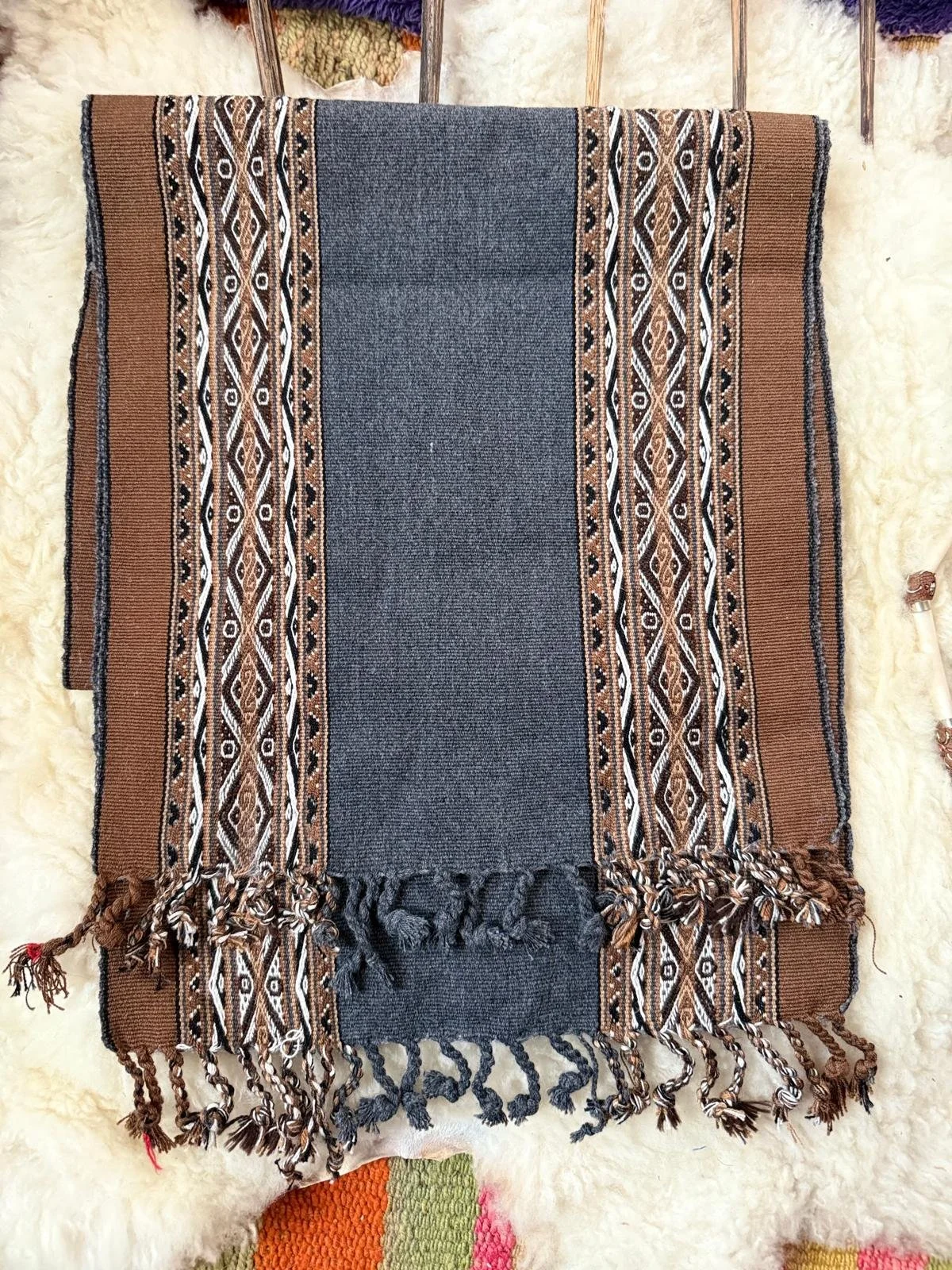
Camino de Mesa - Camino de Vida y Río
Handwoven by Mamita Benita, who grew up in the Amaru community near the sacred lakes of Kinsa Cocha high above the Sacred Valley of Peru, this traditional camino de mesa reflects the movement, flow, and unfolding journey of life itself.
Raised within the weaving traditions of the high Andes and now living in Pisac, Benita carries ancestral knowledge through her textile work, weaving patterns and stories shaped by the mountains, lakes, rivers, and cosmology of her people.
Design:
Camino de Vida y Río
(Life Path & River)
The flowing lines within this design evoke the movement of rivers through the Andes always changing, always moving, always finding their path through the mountains.
Within Andean understanding, life is lived through relationship with nature and its cycles.
The river becomes a reflection of the human journey:
movement, challenge, learning, growth, return.
Woven slowly and intentionally by hand, this piece carries the feeling of continuity and flow while remaining deeply grounded in the stillness of the mountains and sacred waters surrounding Kinsa Cocha.
No two are exactly alike.
Use
Beautiful as:
Mesa or altar cloth
Table runner
Sacred ceremonial textile
Meditation or prayer space
Despacho foundation
Symbolic piece for transitions and new chapters
A reminder to trust the unfolding path while remaining connected to the land beneath your feet.
These are not mass-produced textiles.
They are woven stories from the Andes carrying the rhythm, symbolism, and living traditions of the mountain communities where they were created.
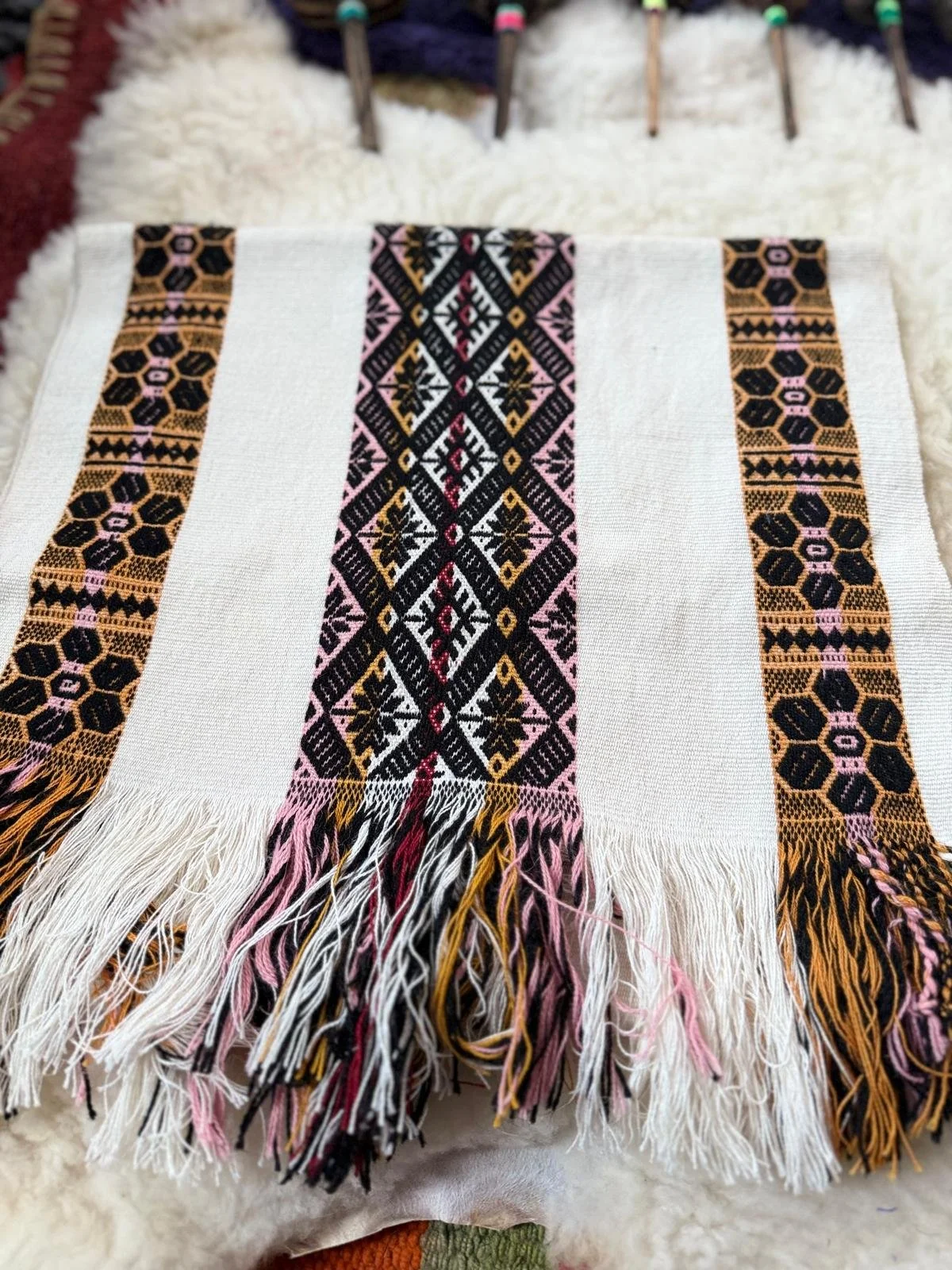
Camino de Mesa - Corazón de Pachamama y Flores
Handwoven by Mamita Benita, a master weaver now living in Pisac who grew up in the Amaru community high in the Peruvian Andes near the sacred lakes of Kinsa Cocha, above 3600 metres in elevation.
The weaving traditions carried through Amaru are deeply rooted in Andean cosmology, symbolism, and relationship with the mountains and land. In these regions, weaving is not simply craft; it is memory, lineage, and prayer carried through the hands.
Design:
Corazón de Pachamama y Flores
(Heart of Pachamama & Flowers)
This design speaks to the nurturing and life-giving force of Pachamama, Mother Earth within the Andean cosmovision.
The heart represents devotion, connection, and relationship with the living spirit of the land, while the flowers reflect beauty, growth, abundance, and the continual unfolding of life through nature’s cycles.
Soft yet powerful.
Grounded yet alive.
Woven slowly by hand using traditional Andean techniques passed through generations, these pieces carry the warmth and quiet strength of the high mountain communities they come from.
Every thread carries time, care, and intention.
Use
Beautiful as:
Mesa or altar cloth
Table runner
Despacho foundation
Sacred space textile
Wall hanging
Daily reminder of connection with Pachamama
These textiles bring warmth and life into the spaces they enter.
This is not factory-made work.
It is a living thread of Andean tradition woven by hand in relationship with the mountains, sacred lakes, and spirit of the Andes.
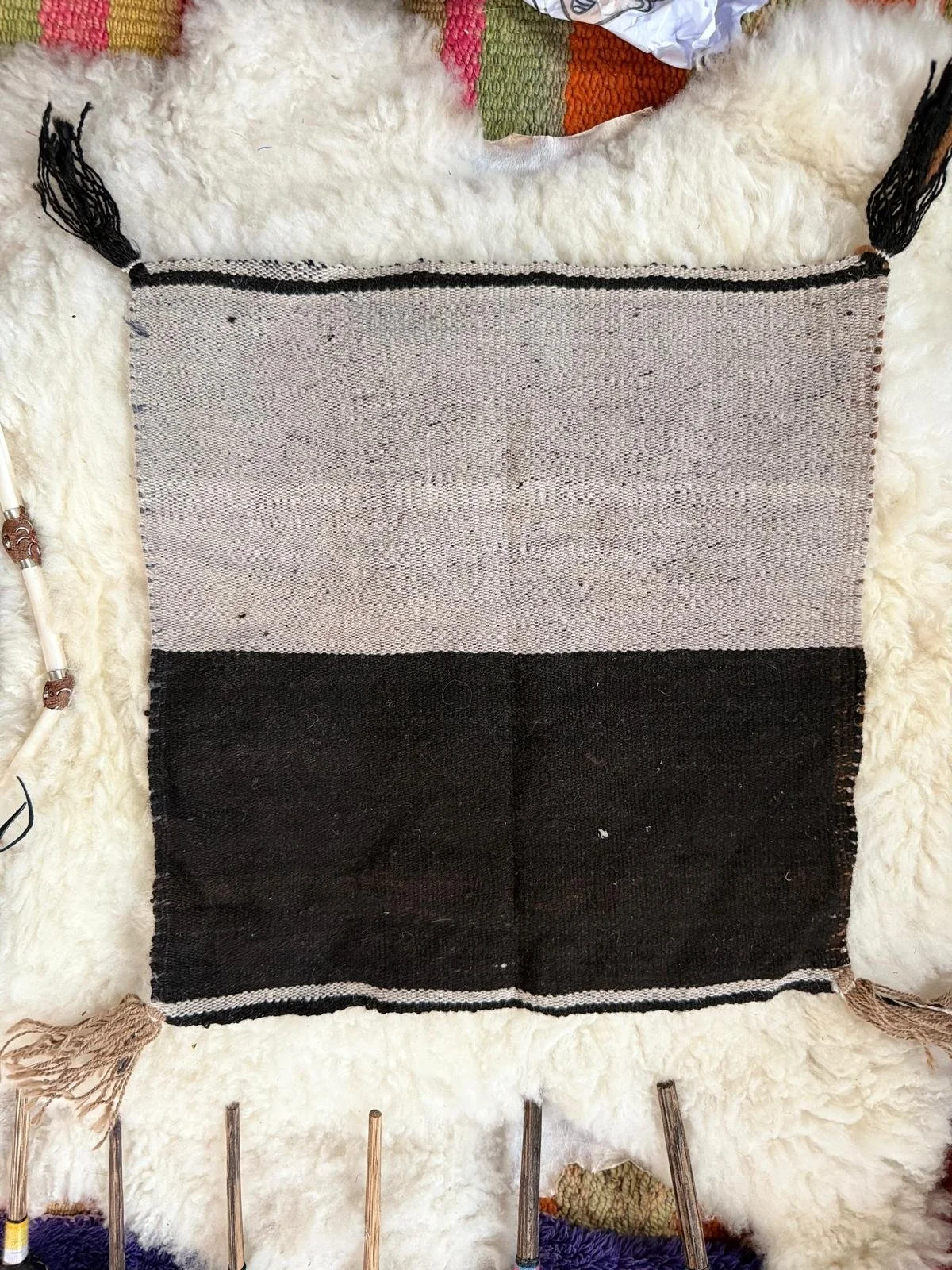
Q’ero Duality Mestana / Unkuna Altar Cloth
Handwoven in the high Andes near Ocongate, Peru, by families connected to the Q’ero traditions, communities living in the shadow of the sacred Ausangate Mountain, one of the most revered Apus (mountain spirits) within Andean cosmology.
Widely regarded as descendants of the Inka lineage and keepers of ancient Andean wisdom traditions, the Q’ero people continue to carry weaving, ceremony, and relationship with the mountains as part of daily life.
Within Q’ero tradition, weaving is far more than craft.
It is memory.
Prayer.
Relationship with the land and the Apus.
This traditional Unkuna ceremonial cloth expresses the Andean principle of Yanantin, sacred duality and complementary relationship.
Black and white.
Light and shadow.
Feminine and masculine.
Earth and sky.
Not opposing forces…
but energies existing in relationship and balance with one another.
Traditionally, an Unkuna is used to carry sacred items:
Coca leaves
Despacho offerings
Ceremonial tools
Personal medicine objects
It becomes a woven holding space for prayer and intention.
Each piece is handmade slowly from beginning to end.
The wool is gathered traditionally, hand-spun, naturally dyed using plants and seeds from the region, and woven using ancestral techniques carried through generations of Q’ero families.
These textiles are considered among the closest living expressions of traditional Inka weaving methods still alive today.
Use
Beautiful as:
Personal altar or mesa cloth
Despacho base
Sacred carrying cloth
Wall hanging
Ceremonial textile
Meditation or prayer space
These are not decorative imitations.
They are living traditional textiles carrying the spirit, symbolism, and mountain lineage of the Andes.
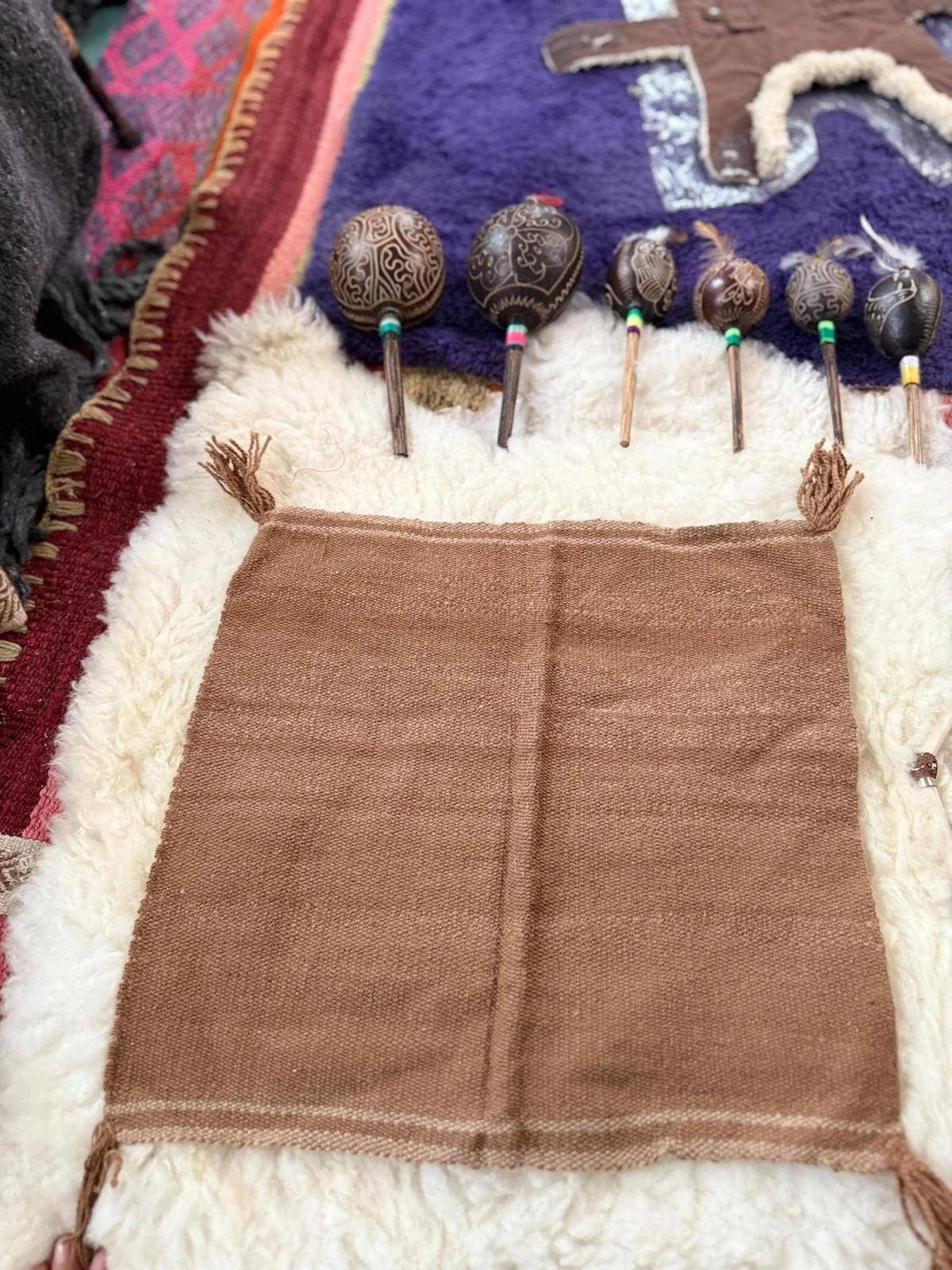
Single Tone Q’ero Mestana / Altar Cloth
Handwoven in the high Andes near Ocongate, Peru, close to the sacred Ausangate Mountain, this traditional altar cloth carries the simplicity and quiet strength the Andean traditions are known for.
Woven by families connected to the Q’ero lineage, these textiles emerge from mountain communities where weaving remains deeply tied to prayer, land, memory, and relationship with the Apus, the sacred mountain spirits of the Andes.
Unlike more intricate duality or four-direction designs, this single-tone piece carries a different feeling.
Simplicity.
Stillness.
Wholeness.
A return to the essence beneath separation.
Within Andean cosmology, balance is often understood through relationship masculine and feminine, above and below, inner and outer.
Yet beneath all polarity exists a deeper unity.
This piece reflects that quiet field.
Not divided.
Not opposing.
Simply held together as one.
Each cloth is handmade slowly from beginning to end.
The wool is traditionally gathered, hand-spun, naturally dyed, and woven using ancestral techniques passed through generations of Andean weavers.
Simple in appearance, yet deeply grounding in presence.
Use
Beautiful as:
Personal altar or mesa cloth
Meditation or prayer space
Despacho foundation
Sacred carrying cloth
Wall hanging
Minimal ceremonial textile
Its simplicity allows whatever is placed upon it to speak clearly.
These textiles are not mass-produced decorations.
They are woven expressions of mountain lineage, stillness, and traditional Andean craftsmanship from the regions surrounding Ausangate.
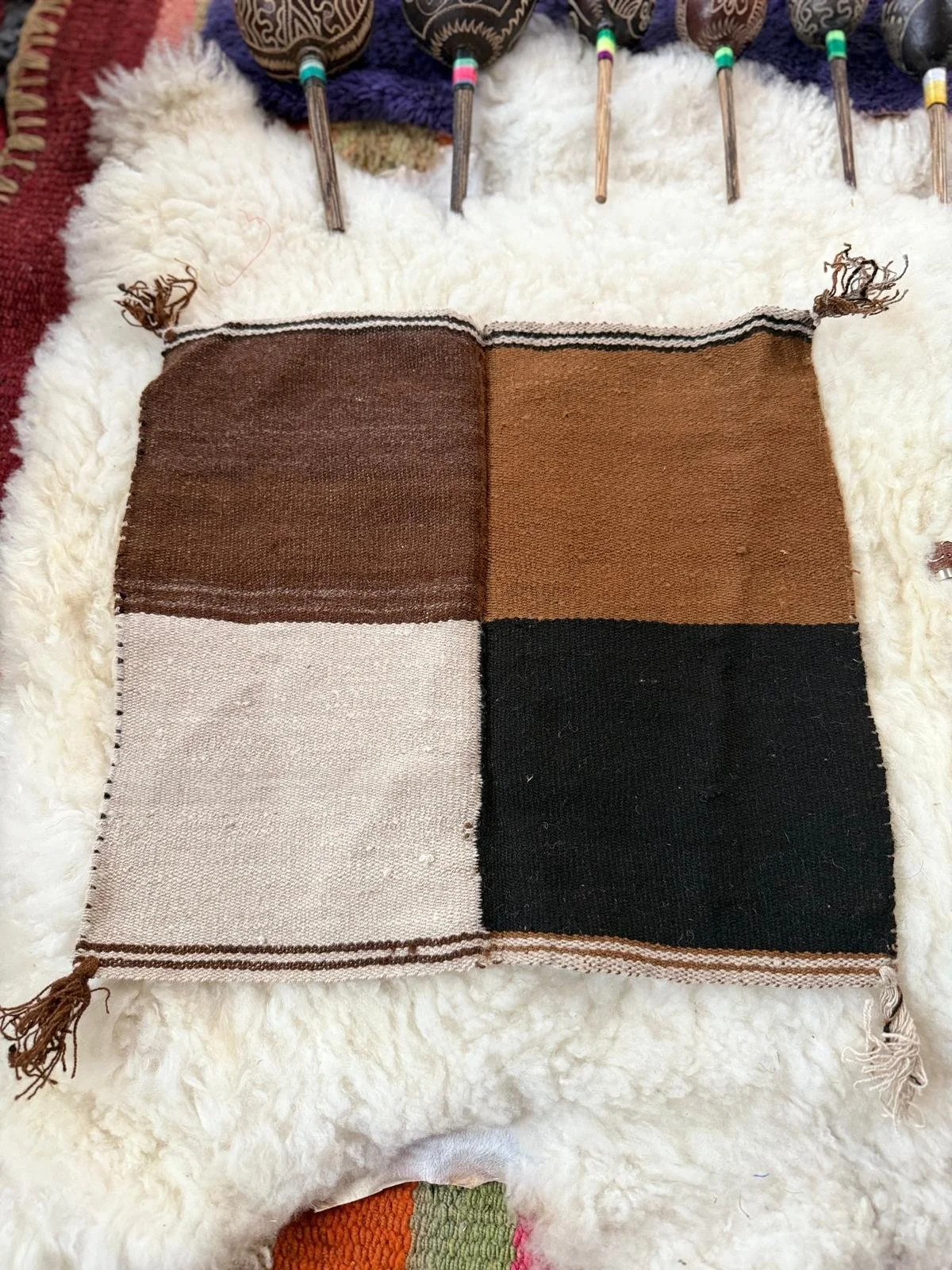
Q’ero Four Elements Mestana / Tawa Altar Cloth
Handwoven near Ocongate in the Peruvian Andes, close to the sacred Ausangate Mountain, these traditional altar cloths embody the Andean principle of Tawa; the sacred “four.”
For the Q’ero peoples and surrounding mountain communities, Ausangate is far more than a mountain. It is an Apu a living spirit, protector, teacher, and powerful presence within Andean ceremonial life.
Within Andean cosmology, life is understood through relationship and balance.
The four directions.
The four elements.
The four regions of the Andean world.
Tawa represents wholeness; a field where all aspects of life exist in right relationship with one another.
These textiles are woven slowly and traditionally using ancestral methods passed down through generations.
The wool is gathered from alpacas raised within the mountain communities themselves, then hand-spun and naturally dyed using plants, minerals, and seeds from the Andes before being woven into these ceremonial pieces.
Every thread carries time, care, and lineage.
Traditionally, textiles of this kind are used as:
Mesa or altar cloths
Despacho foundations
Ceremonial textiles
Sacred carrying cloths
Prayer and meditation spaces
Simple in appearance, yet deeply intentional in symbolism and energy.
Traditional Significance
Represents the four directions and sacred balance
Connected to the wisdom of Tawantinsuyu; the four regions of the Andean world
Reflects harmony, integration, and ayni (right relationship)
Handwoven by Q’ero artisans using traditional methods
These are not mass-produced textiles.
They are woven prayers from the mountains of Peru carrying the stillness, warmth, and spirit of the Andes into the spaces they enter.
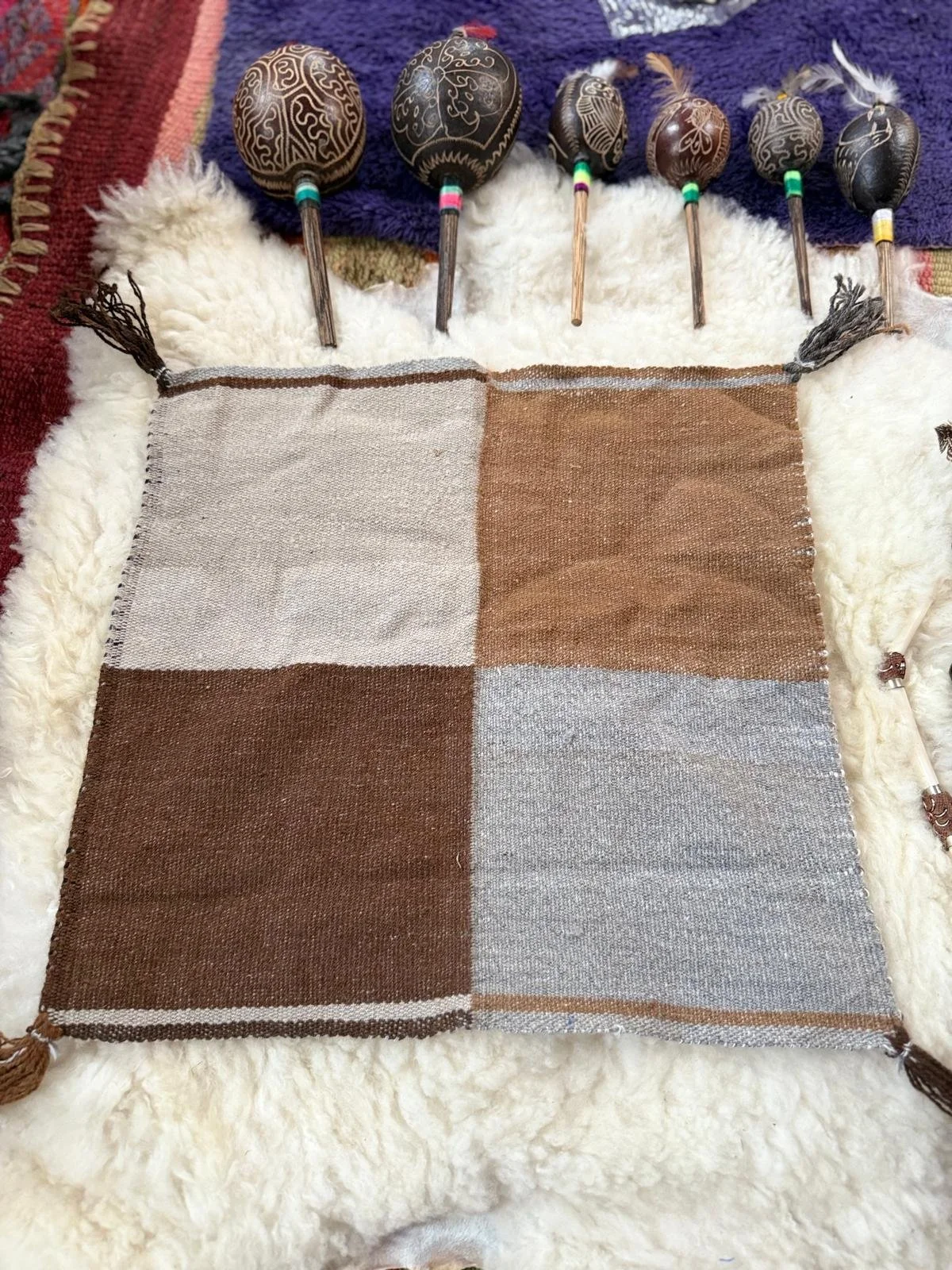
Q’ero Four Elements Mestana / Tawa Altar Cloth
Handwoven near Ocongate in the Peruvian Andes, close to the sacred Ausangate Mountain, these traditional altar cloths embody the Andean principle of Tawa; the sacred “four.”
For the Q’ero peoples and surrounding mountain communities, Ausangate is far more than a mountain. It is an Apu a living spirit, protector, teacher, and powerful presence within Andean ceremonial life.
Within Andean cosmology, life is understood through relationship and balance.
The four directions.
The four elements.
The four regions of the Andean world.
Tawa represents wholeness; a field where all aspects of life exist in right relationship with one another.
These textiles are woven slowly and traditionally using ancestral methods passed down through generations.
The wool is gathered from alpacas raised within the mountain communities themselves, then hand-spun and naturally dyed using plants, minerals, and seeds from the Andes before being woven into these ceremonial pieces.
Every thread carries time, care, and lineage.
Traditionally, textiles of this kind are used as:
Mesa or altar cloths
Despacho foundations
Ceremonial textiles
Sacred carrying cloths
Prayer and meditation spaces
Simple in appearance, yet deeply intentional in symbolism and energy.
Traditional Significance
Represents the four directions and sacred balance
Connected to the wisdom of Tawantinsuyu; the four regions of the Andean world
Reflects harmony, integration, and ayni (right relationship)
Handwoven by Q’ero artisans using traditional methods
These are not mass-produced textiles.
They are woven prayers from the mountains of Peru carrying the stillness, warmth, and spirit of the Andes into the spaces they enter.
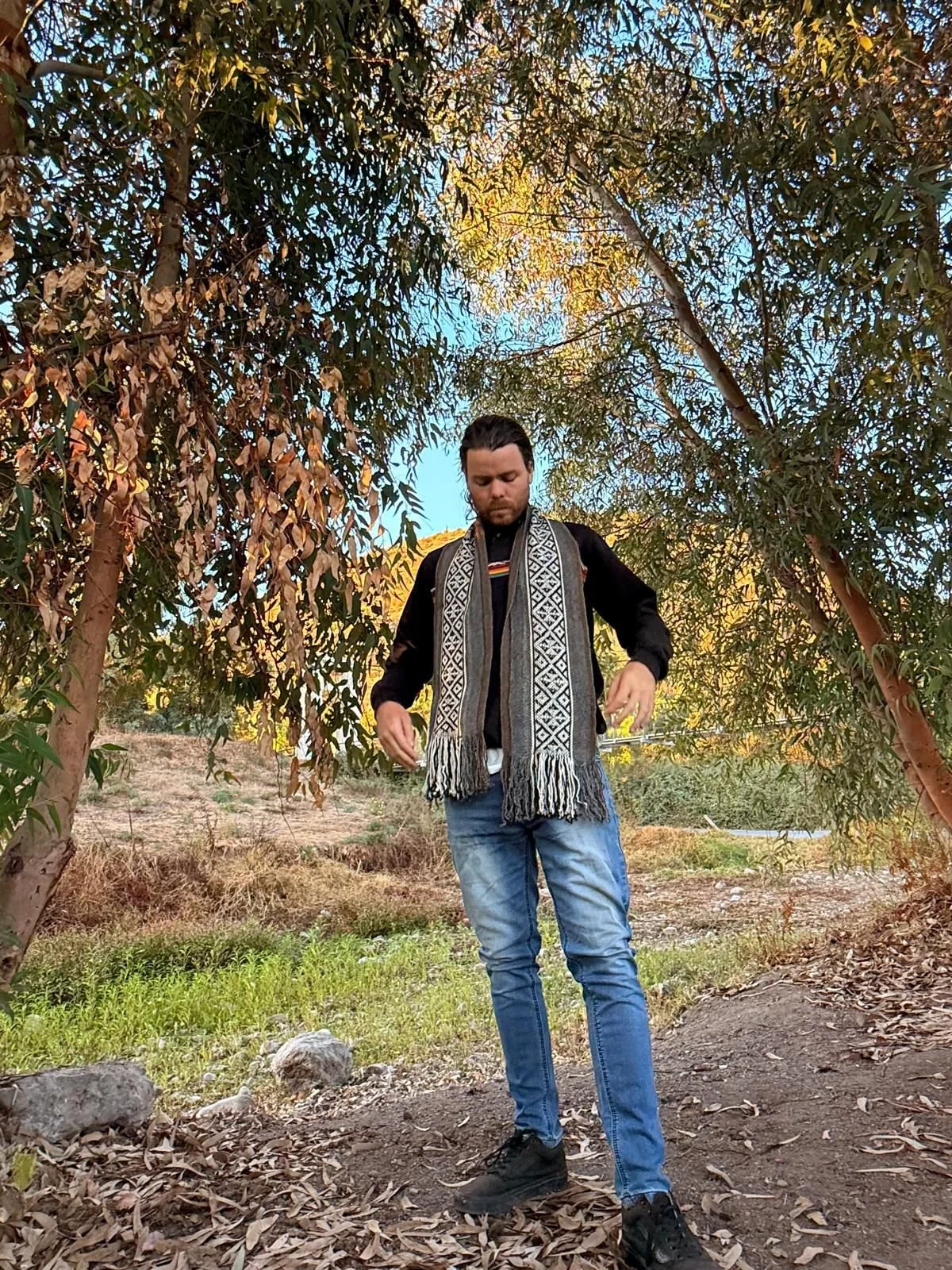
Traditional Andean Shawls - Lliklla - Handmade in the High Andes of Peru
Known traditionally in Quechua as a Lliklla (also spelled lliclla), these handwoven Andean shawls have been worn by Indigenous women of the Andes for generations. Traditionally used for warmth, ceremony, carrying sacred items, and daily mountain life, the lliklla remains one of the most iconic woven textiles of the Peruvian highlands.
Our pieces are sourced through local artisan markets in Cusco and woven by mamitas from remote mountain communities east of Cusco around Aquas Termales by communities including Chaupimayo, Pinchimuro, and Pacchanta Alta & Baja, high in the Andes where weaving traditions continue to live through family lineage and daily practice.
Many of these traditions are connected to the Q’ero communities and surrounding mountain peoples, where weaving is more than craft, it is identity, prayer, and cultural memory passed from generation to generation
Made from alpaca and traditional Andean fibres, these shawls carry incredible warmth while remaining breathable and soft. In the high mountain villages they come from, these garments are essential for daily life, protecting from cold winds, wrapping babies, carrying food and offerings, and accompanying ceremony and prayer.
Each piece is handmade slowly and traditionally, taking many days to make a single shawl.
No two are exactly the same.
Perfect for:
Ceremony & altar work
Shawl or wrap for cold mornings and evenings
Meditation & prayer
Travel
Connecting with traditional Andean craftsmanship
Carrying sacred items or creating mesa space
These are not factory-made textiles.
They are woven stories from the mountains of Peru, carrying the hands, time, and lineage of the women who made them.
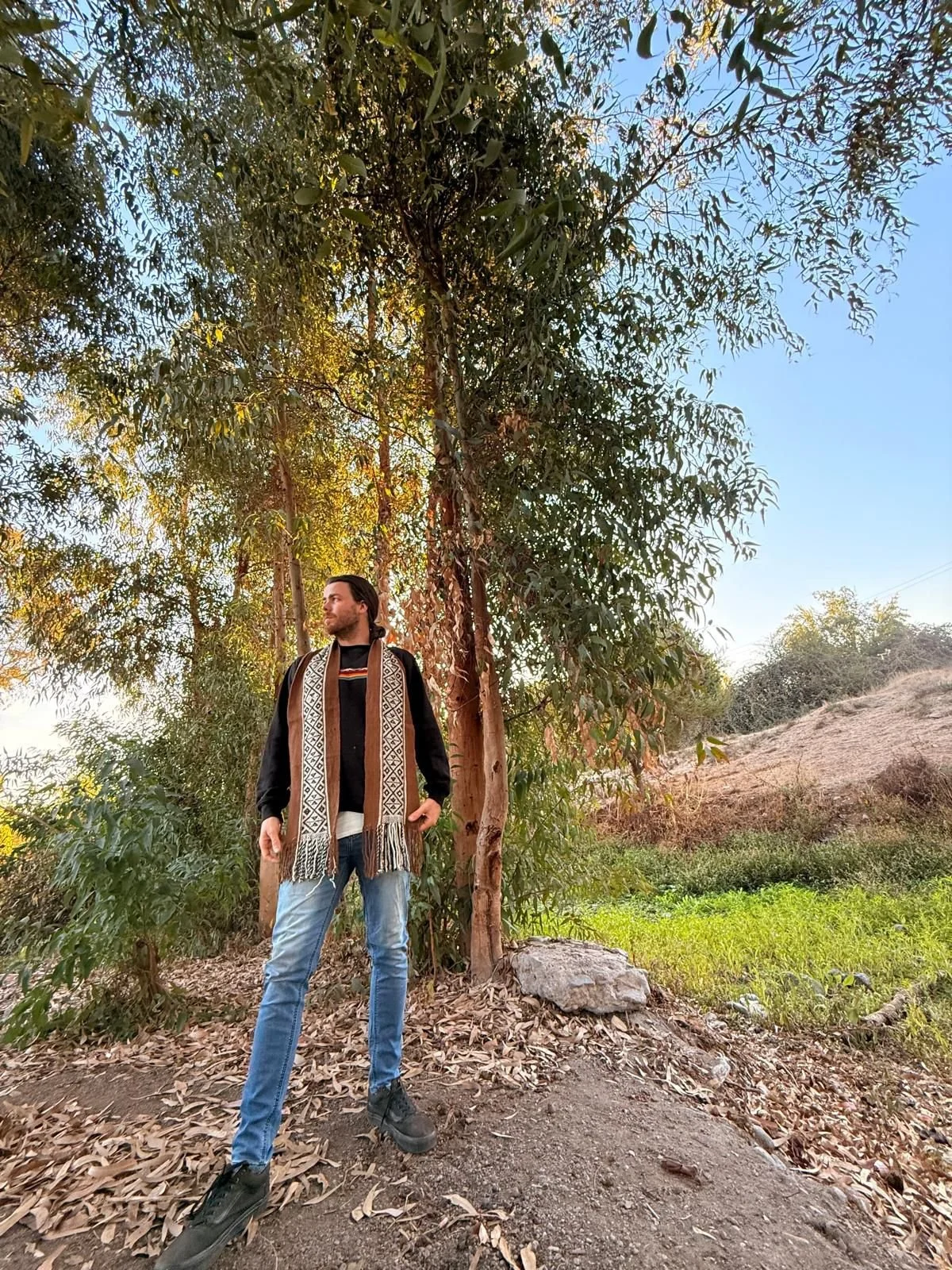
Traditional Andean Shawls - Lliklla - Handmade in the High Andes of Peru
Known traditionally in Quechua as a Lliklla (also spelled lliclla), these handwoven Andean shawls have been worn by Indigenous women of the Andes for generations. Traditionally used for warmth, ceremony, carrying sacred items, and daily mountain life, the lliklla remains one of the most iconic woven textiles of the Peruvian highlands.
Our pieces are sourced through local artisan markets in Cusco and woven by mamitas from remote mountain communities east of Cusco around Aquas Termales by communities including Chaupimayo, Pinchimuro, and Pacchanta Alta & Baja, high in the Andes where weaving traditions continue to live through family lineage and daily practice.
Many of these traditions are connected to the Q’ero communities and surrounding mountain peoples, where weaving is more than craft, it is identity, prayer, and cultural memory passed from generation to generation
Made from alpaca and traditional Andean fibres, these shawls carry incredible warmth while remaining breathable and soft. In the high mountain villages they come from, these garments are essential for daily life, protecting from cold winds, wrapping babies, carrying food and offerings, and accompanying ceremony and prayer.
Each piece is handmade slowly and traditionally, taking many days to make a single shawl.
No two are exactly the same.
Perfect for:
Ceremony & altar work
Shawl or wrap for cold mornings and evenings
Meditation & prayer
Travel
Connecting with traditional Andean craftsmanship
Carrying sacred items or creating mesa space
These are not factory-made textiles.
They are woven stories from the mountains of Peru, carrying the hands, time, and lineage of the women who made them.
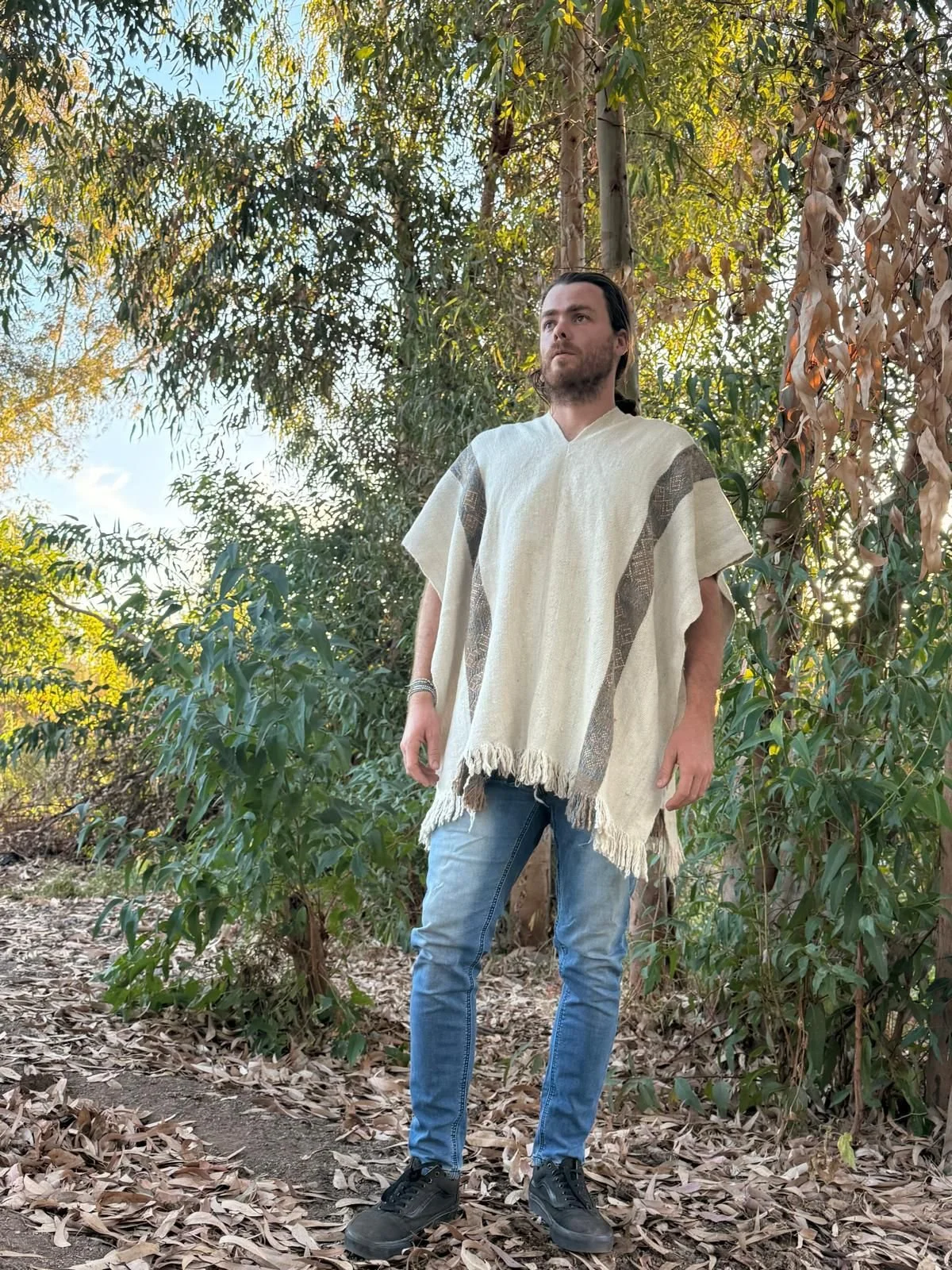
Baby Alpaca Ponchos - Handmade in the High Andes of Peru
Handwoven in the mountains surrounding Cusco by Indigenous mamitas from remote Andean communities, these baby alpaca ponchos carry the warmth, strength, and spirit of the highlands they come from.
Many of the pieces we source come through families connected to the Q’ero traditions, communities living high in the Andes where weaving is not simply craft, but a lineage passed through generations.
These are one of the pieces we haven’t yet been able to get to the source however through the trusted hands we receive these from, we are told these come from the communities around the hot spring mountain regions east of Cusco (Aquas Termales) such as Chaupimayo, Pinchimuro, and Pacchanta Alta & Baja; places sitting high above sea level where warmth is not luxury, but necessity. (Think 4000-4500metres above sea level)
Each poncho is handmade slowly, often taking weeks to over a month to complete depending on the complexity of the weave, patterns, and detailing.
Made from baby alpaca fibre, these ponchos are incredibly soft while still carrying the deep warmth alpaca is known for in the Andes. Traditionally, alpaca weaving has been part of everyday mountain life for centuries, with weaving techniques and symbolic patterns passed from mothers to daughters through the generations.
These are not factory-made garments.
They are pieces carrying story, tradition, prayer, and the hands of the women who made them.
Perfect for:
Ceremony & prayer
Cold mornings and evenings
Daily wear with presence
Sitting by the fire
Connection to the Andes and traditional craftsmanship
By purchasing these pieces, you are directly supporting Indigenous artisans and helping keep ancestral weaving traditions alive in the mountains of Peru.
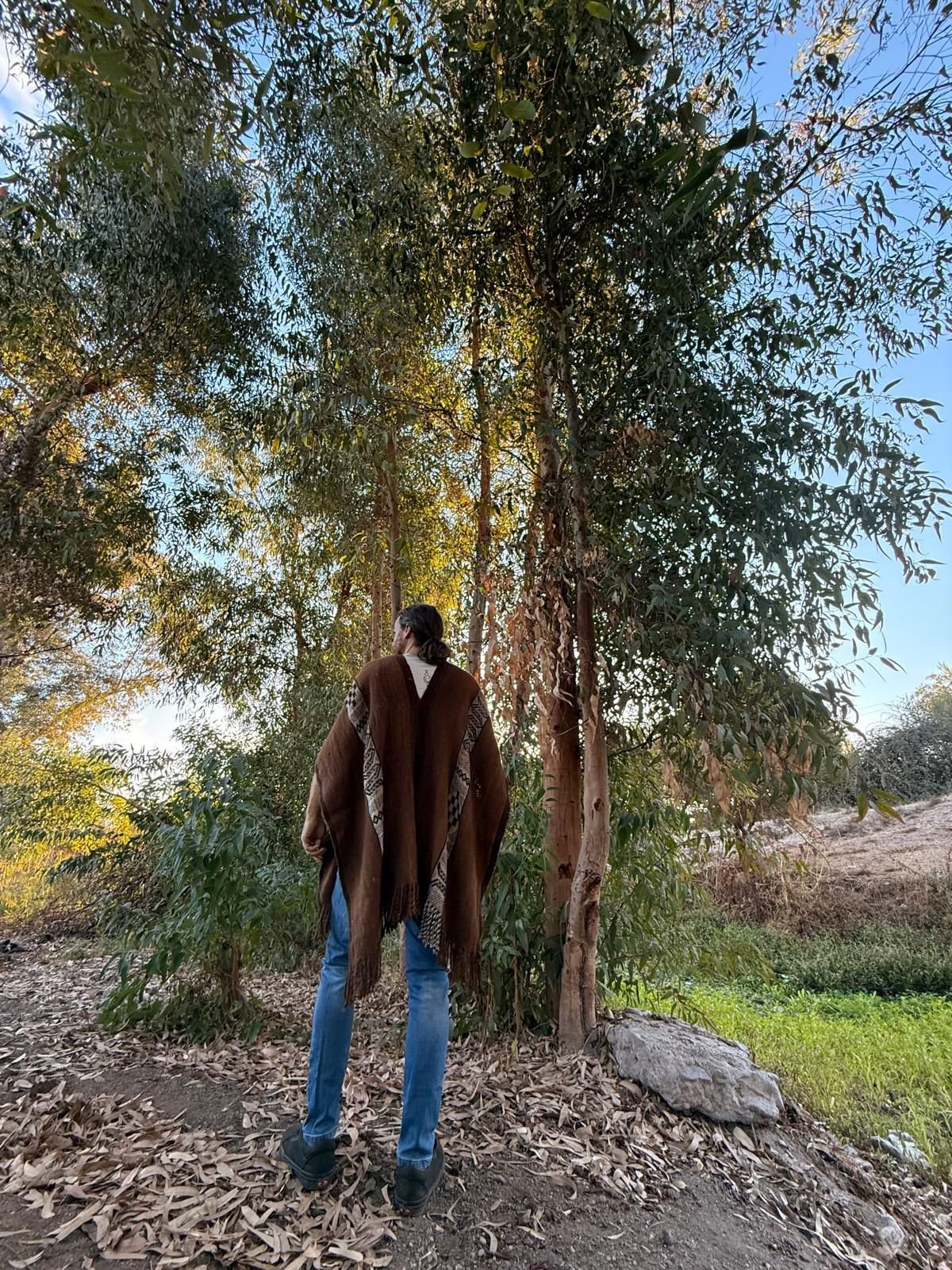
Baby Alpaca Ponchos - Handmade in the High Andes of Peru
Handwoven in the mountains surrounding Cusco by Indigenous mamitas from remote Andean communities, these baby alpaca ponchos carry the warmth, strength, and spirit of the highlands they come from.
Many of the pieces we source come through families connected to the Q’ero traditions, communities living high in the Andes where weaving is not simply craft, but a lineage passed through generations.
These are one of the pieces we haven’t yet been able to get to the source however through the trusted hands we receive these from, we are told these come from the communities around the hot spring mountain regions east of Cusco (Aquas Termales) such as Chaupimayo, Pinchimuro, and Pacchanta Alta & Baja; places sitting high above sea level where warmth is not luxury, but necessity. (Think 4000-4500metres above sea level)
Each poncho is handmade slowly, often taking weeks to over a month to complete depending on the complexity of the weave, patterns, and detailing.
Made from baby alpaca fibre, these ponchos are incredibly soft while still carrying the deep warmth alpaca is known for in the Andes. Traditionally, alpaca weaving has been part of everyday mountain life for centuries, with weaving techniques and symbolic patterns passed from mothers to daughters through the generations.
These are not factory-made garments.
They are pieces carrying story, tradition, prayer, and the hands of the women who made them.
Perfect for:
Ceremony & prayer
Cold mornings and evenings
Daily wear with presence
Sitting by the fire
Connection to the Andes and traditional craftsmanship
By purchasing these pieces, you are directly supporting Indigenous artisans and helping keep ancestral weaving traditions alive in the mountains of Peru.
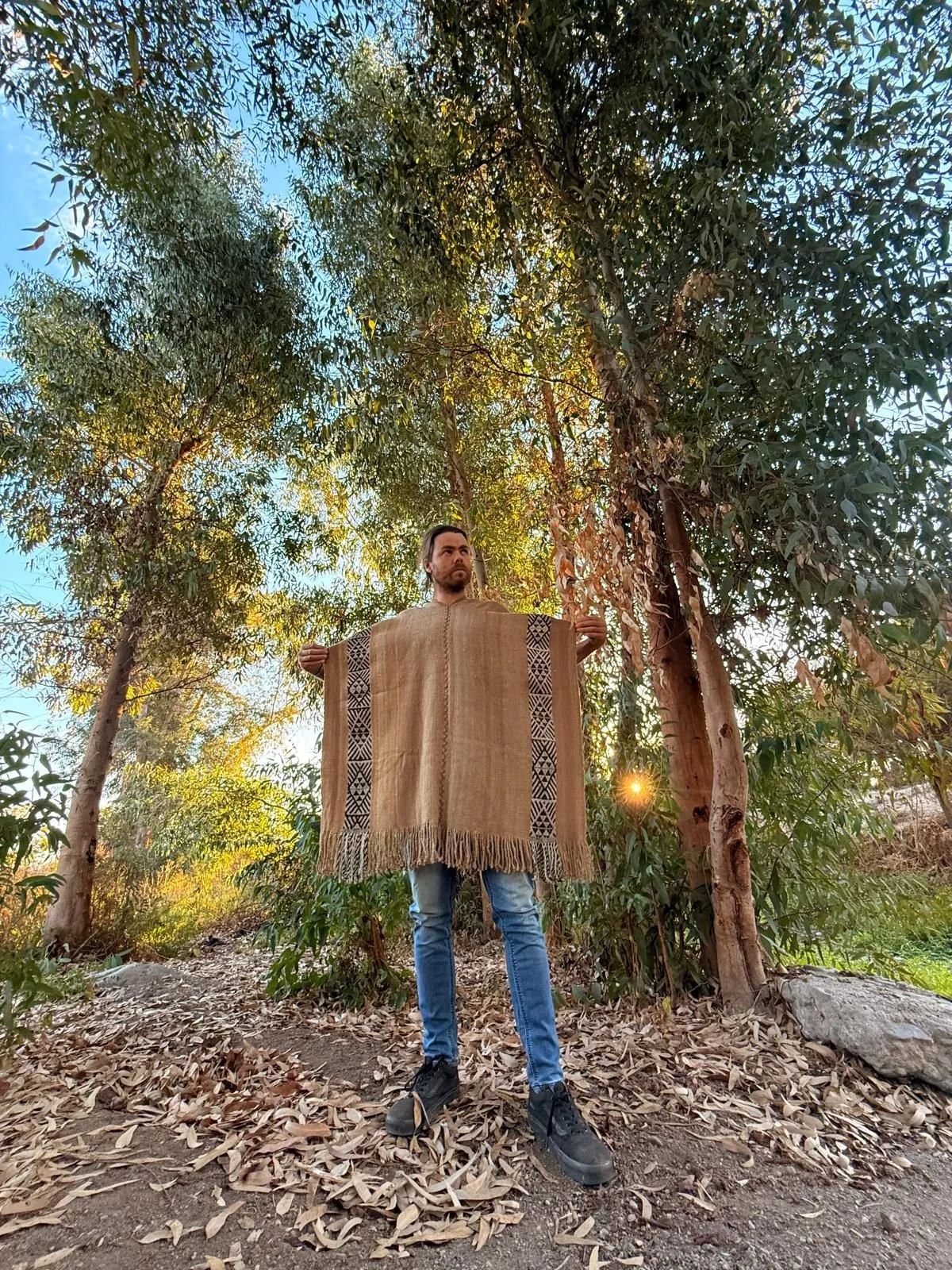
Baby Alpaca Ponchos - Handmade in the High Andes of Peru
Handwoven in the mountains surrounding Cusco by Indigenous mamitas from remote Andean communities, these baby alpaca ponchos carry the warmth, strength, and spirit of the highlands they come from.
Many of the pieces we source come through families connected to the Q’ero traditions, communities living high in the Andes where weaving is not simply craft, but a lineage passed through generations.
These are one of the pieces we haven’t yet been able to get to the source however through the trusted hands we receive these from, we are told these come from the communities around the hot spring mountain regions east of Cusco (Aquas Termales) such as Chaupimayo, Pinchimuro, and Pacchanta Alta & Baja; places sitting high above sea level where warmth is not luxury, but necessity. (Think 4000-4500metres above sea level)
Each poncho is handmade slowly, often taking weeks to over a month to complete depending on the complexity of the weave, patterns, and detailing.
Made from baby alpaca fibre, these ponchos are incredibly soft while still carrying the deep warmth alpaca is known for in the Andes. Traditionally, alpaca weaving has been part of everyday mountain life for centuries, with weaving techniques and symbolic patterns passed from mothers to daughters through the generations.
These are not factory-made garments.
They are pieces carrying story, tradition, prayer, and the hands of the women who made them.
Perfect for:
Ceremony & prayer
Cold mornings and evenings
Daily wear with presence
Sitting by the fire
Connection to the Andes and traditional craftsmanship
By purchasing these pieces, you are directly supporting Indigenous artisans and helping keep ancestral weaving traditions alive in the mountains of Peru.
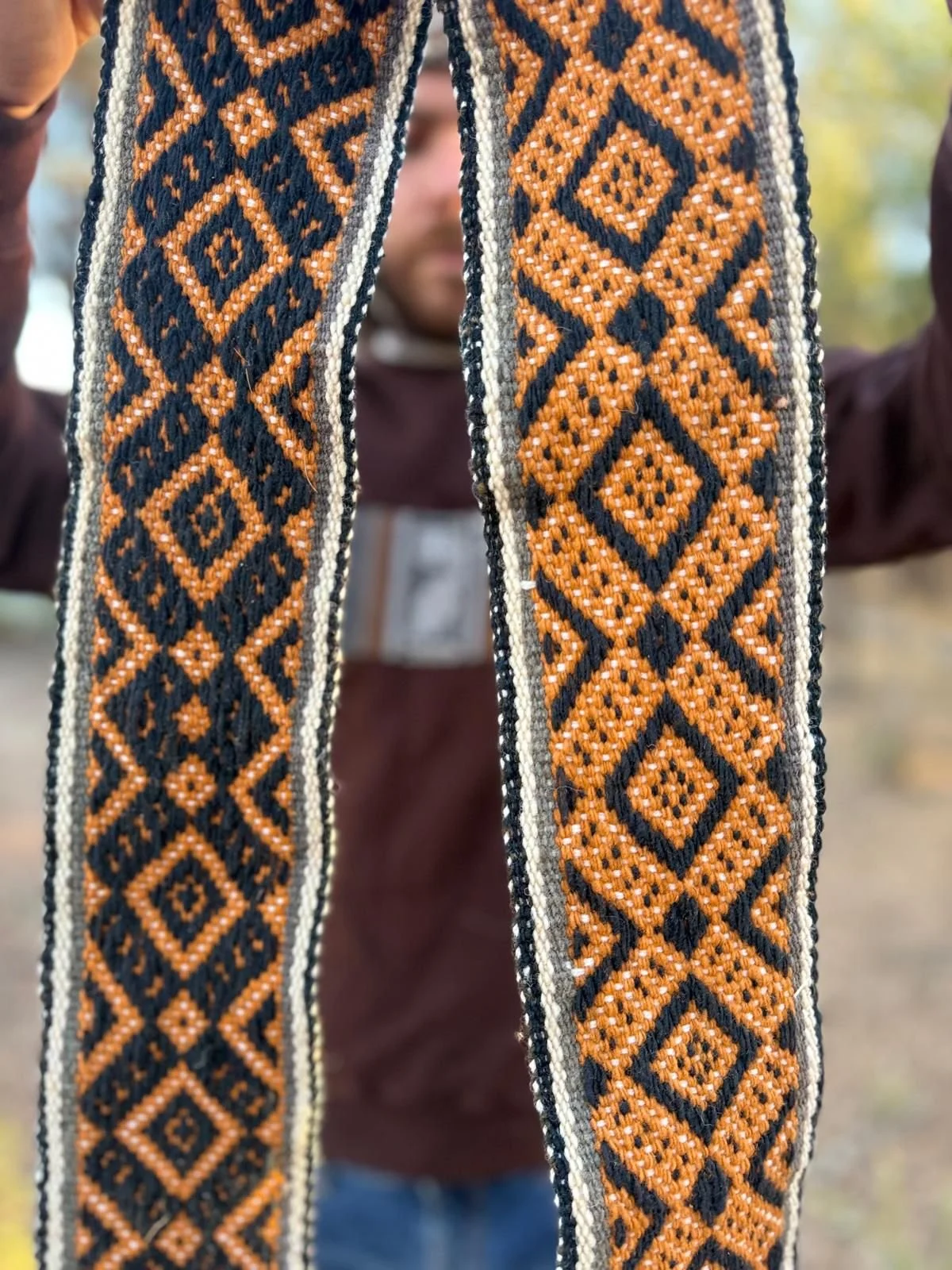
These handwoven Andean belts, traditionally known as Chumpis, are crafted in small quantities in collaboration with skilled artisans in Peru. Each belt carries its own distinct pattern and colour story, woven using techniques passed down through generations.
Chumpis have long been used in Andean communities as strong, durable waist sashes. Woven on traditional backstrap looms, they are known for their resilience and tight construction.
In many Andean regions, Chumpis are regarded as protective textiles. The geometric patterns are part of a traditional visual prayer connected to Andean cosmology and relationship with Pachamama (Mother Earth). When worn, they are associated with grounding, strength, and protection, especially during ceremony or meaningful gatherings.
We work directly with makers to ensure fair exchange and continuity of traditional craft. There is no mass production.
Details:
Material: Handwoven textile
Origin: Pisac Peru - Made By Mami Benita from Amarus Community 3600m above sea level (community connected to Qinsa Qocha)
Length: Approx 1.2 - 1.5m (generally wrap waist twice)
Width: Approx 10cm
Availability: Limited batch
Free shipping Australia-wide.
Processing time: 1–3 business days.
This Chumpi was sourced in May 2026, when we spent multiple days with Benita in her house.
Care Instructions:
Handle with respect. Hand wash gently in warm water and air dry flat. Avoid harsh detergents to preserve the integrity of the weave.
(First wash: Warm water with salt and hang directly in sun to protect the natural dyes)
Being handwoven using traditional methods, each Chumpi is one of a kind in its design and pattern.
Made in small quantities. What’s available now is limited, and restocks depend on the makers and timing of future batches.
This specific design represents the Coca Leaf/Mama Coca, the oracle and master teacher of the Andes.
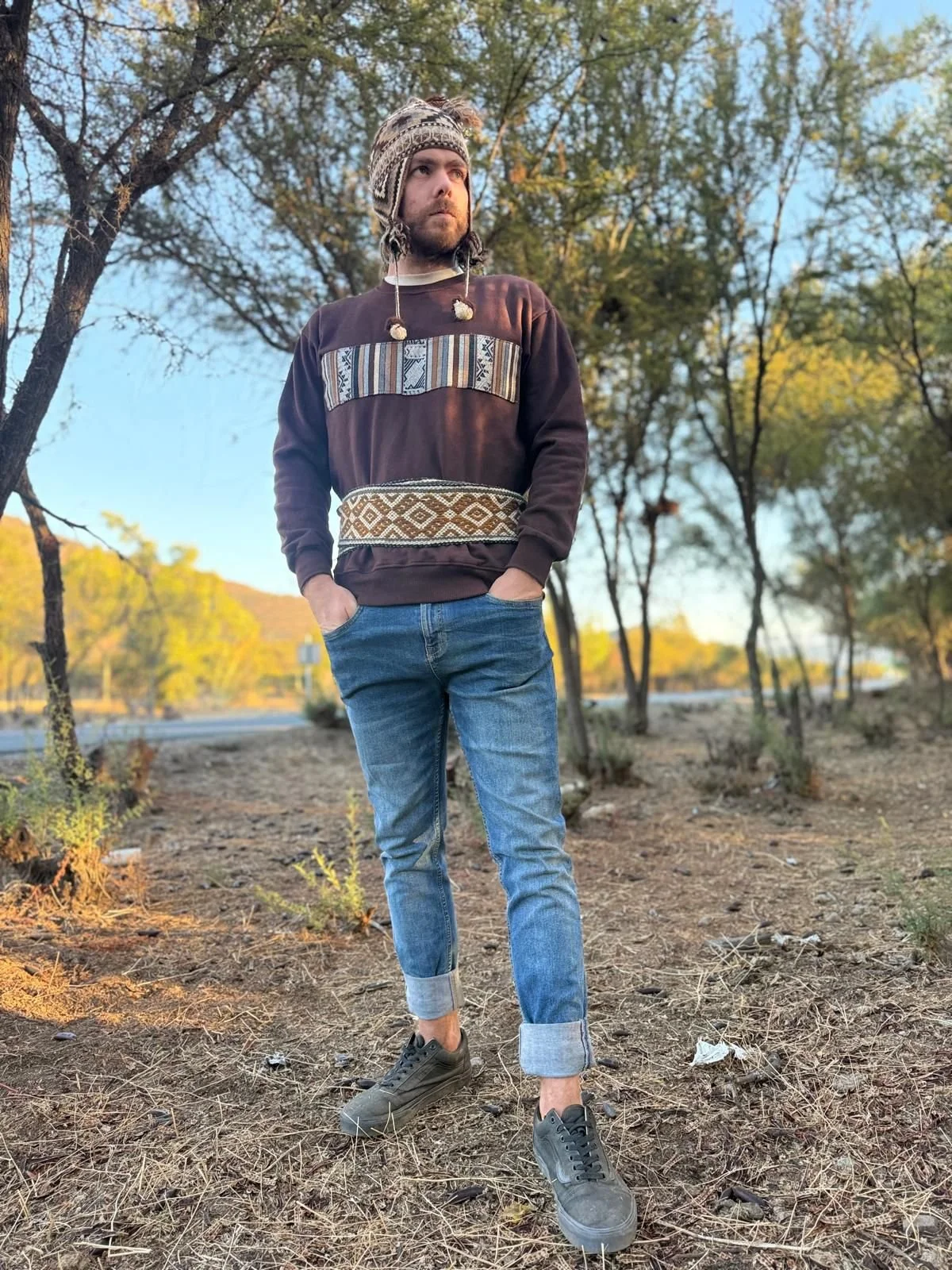
These handwoven Andean belts, traditionally known as Chumpis, are crafted in small quantities in collaboration with skilled artisans in Peru. Each belt carries its own distinct pattern and colour story, woven using techniques passed down through generations.
Chumpis have long been used in Andean communities as strong, durable waist sashes. Woven on traditional backstrap looms, they are known for their resilience and tight construction.
In many Andean regions, Chumpis are regarded as protective textiles. The geometric patterns are part of a traditional visual prayer connected to Andean cosmology and relationship with Pachamama (Mother Earth). When worn, they are associated with grounding, strength, and protection, especially during ceremony or meaningful gatherings.
We work directly with makers to ensure fair exchange and continuity of traditional craft. There is no mass production.
Details:
Material: Handwoven textile
Origin: Pisac Peru - Made By Mami Benita from Amarus Community 3600m above sea level (community connected to Qinsa Qocha)
Length: Approx 1.2 - 1.5m (generally wrap waist twice)
Width: Approx 10cm
Availability: Limited batch
Free shipping Australia-wide.
Processing time: 1–3 business days.
This Chumpi was sourced in May 2026, when we spent multiple days with Benita in her house.
Care Instructions:
Handle with respect. Hand wash gently in warm water and air dry flat. Avoid harsh detergents to preserve the integrity of the weave.
(First wash: Warm water with salt and hang directly in sun to protect the natural dyes)
Being handwoven using traditional methods, each Chumpi is one of a kind in its design and pattern.
Made in small quantities. What’s available now is limited, and restocks depend on the makers and timing of future batches.
This specific design represents the Sacred Coca Leaf, the oracle and master teacher of the Andes.
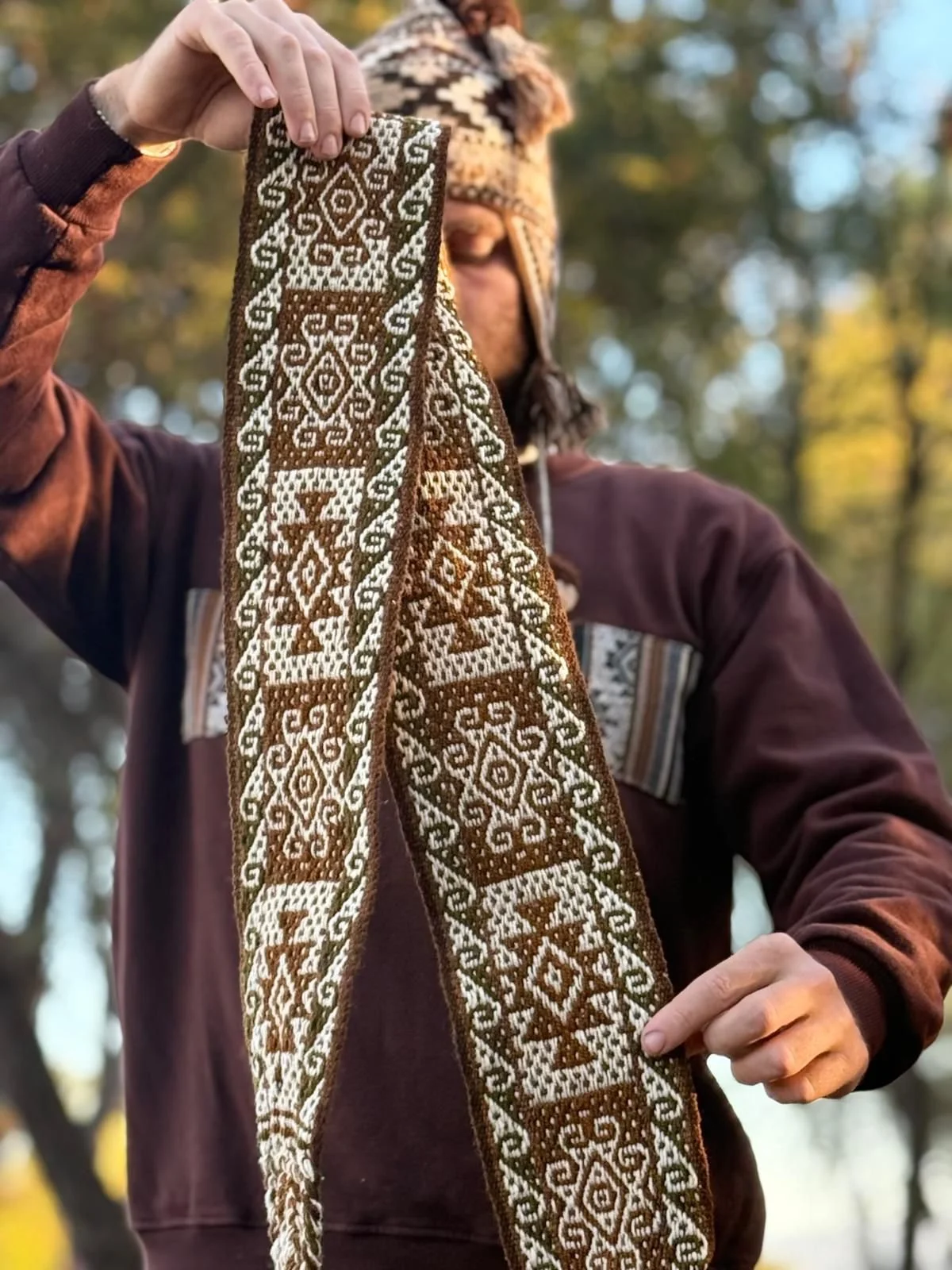
These handwoven Andean belts, traditionally known as Chumpis, are crafted in small quantities in collaboration with skilled artisans in Peru. Each belt carries its own distinct pattern and colour story, woven using techniques passed down through generations.
Chumpis have long been used in Andean communities as strong, durable waist sashes. Woven on traditional backstrap looms, they are known for their resilience and tight construction.
In many Andean regions, Chumpis are regarded as protective textiles. The geometric patterns are part of a traditional visual prayer connected to Andean cosmology and relationship with Pachamama (Mother Earth). When worn, they are associated with grounding, strength, and protection, especially during ceremony or meaningful gatherings.
We work directly with makers to ensure fair exchange and continuity of traditional craft. There is no mass production.
Details:
Material: Handwoven textile
Origin: Pisac Peru - Made By Mami Benita from Amarus Community 3600m above sea level (community connected to Qinsa Qocha)
Length: Approx 1.2 - 1.5m (generally wrap waist twice)
Width: Approx 10cm
Availability: Limited batch
Free shipping Australia-wide.
Processing time: 1–3 business days.
This Chumpi was sourced in May 2026, when we spent multiple days with Benita in her house.
Care Instructions:
Handle with respect. Hand wash gently in warm water and air dry flat. Avoid harsh detergents to preserve the integrity of the weave.
(First wash: Warm water with salt and hang directly in sun to protect the natural dyes)
Being handwoven using traditional methods, each Chumpi is one of a kind in its design and pattern.
Made in small quantities. What’s available now is limited, and restocks depend on the makers and timing of future batches.
This specific design represents the Chakana (Andean Cross) together with the foot-print of the Puma.
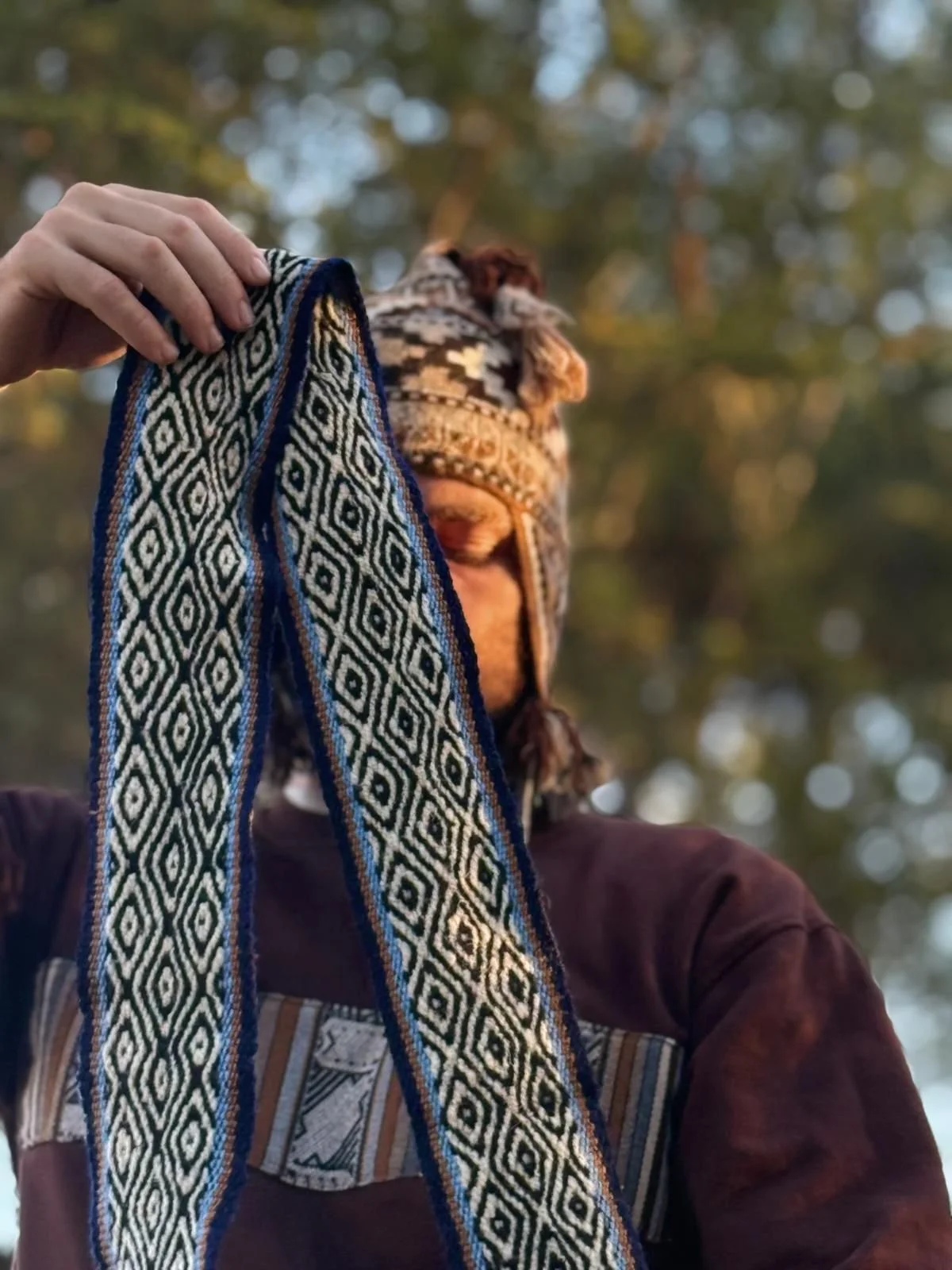
These handwoven Andean belts, traditionally known as Chumpis, are crafted in small quantities in collaboration with skilled artisans in Peru. Each belt carries its own distinct pattern and colour story, woven using techniques passed down through generations.
Chumpis have long been used in Andean communities as strong, durable waist sashes. Woven on traditional backstrap looms, they are known for their resilience and tight construction.
In many Andean regions, Chumpis are regarded as protective textiles. The geometric patterns are part of a traditional visual prayer connected to Andean cosmology and relationship with Pachamama (Mother Earth). When worn, they are associated with grounding, strength, and protection, especially during ceremony or meaningful gatherings.
We work directly with makers to ensure fair exchange and continuity of traditional craft. There is no mass production.
Details:
Material: Handwoven textile
Origin: Pisac Peru - Made By Mami Benita from Amarus Community 3600m above sea level (community connected to Qinsa Qocha)
Length: Approx 1.2 - 1.5m (generally wrap waist twice)
Width: Approx 10cm
Availability: Limited batch
Free shipping Australia-wide.
Processing time: 1–3 business days.
This Chumpi was sourced in May 2026, when we spent multiple days with Benita in her house.
Care Instructions:
Handle with respect. Hand wash gently in warm water and air dry flat. Avoid harsh detergents to preserve the integrity of the weave.
(First wash: Warm water with salt and hang directly in sun to protect the natural dyes)
Being handwoven using traditional methods, each Chumpi is one of a kind in its design and pattern.
Made in small quantities. What’s available now is limited, and restocks depend on the makers and timing of future batches.
This specific design represents the River (the flow of life)
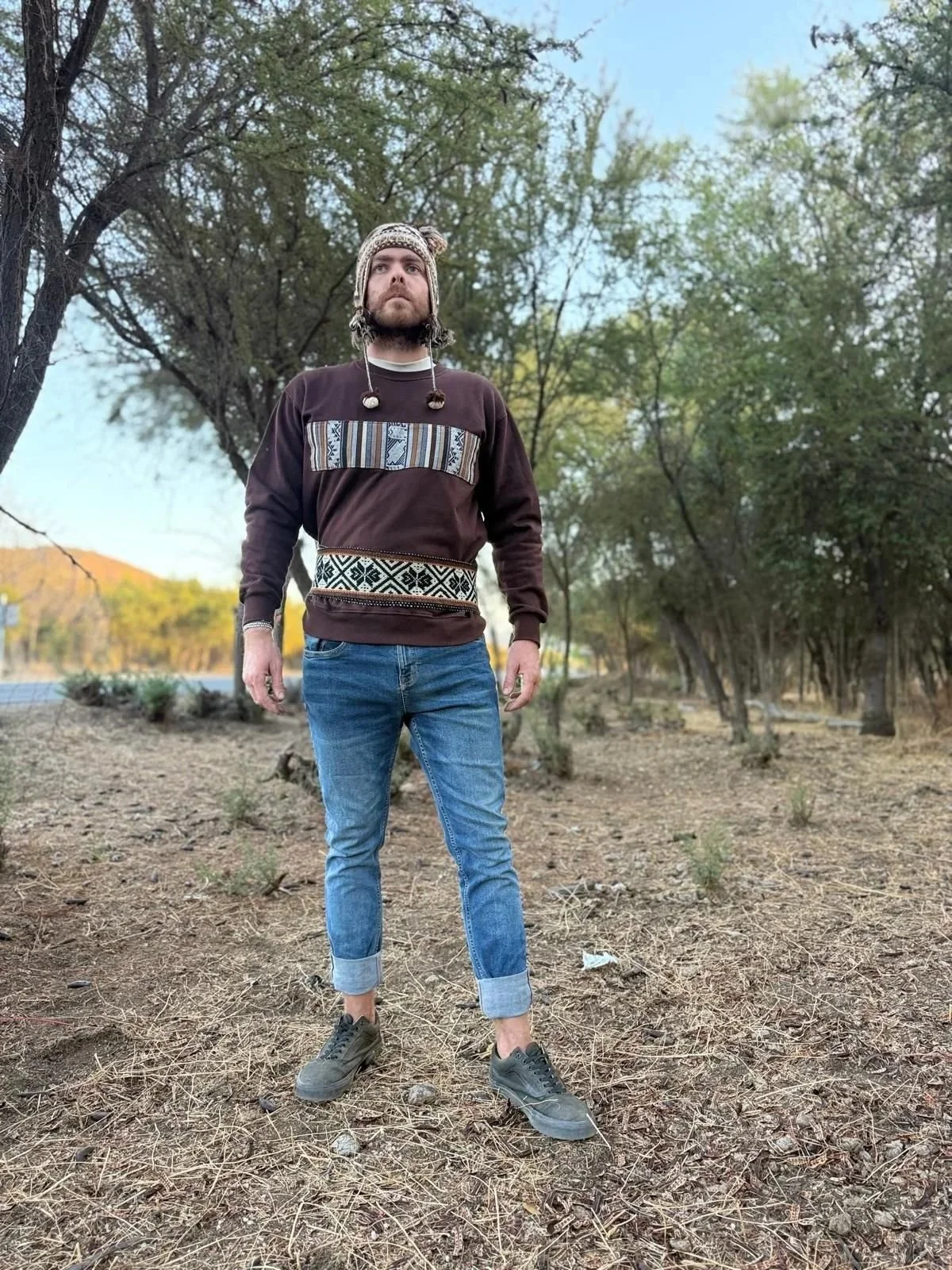
These handwoven Andean belts, traditionally known as Chumpis, are crafted in small quantities in collaboration with skilled artisans in Peru. Each belt carries its own distinct pattern and colour story, woven using techniques passed down through generations.
Chumpis have long been used in Andean communities as strong, durable waist sashes. Woven on traditional backstrap looms, they are known for their resilience and tight construction.
In many Andean regions, Chumpis are regarded as protective textiles. The geometric patterns are part of a traditional visual prayer connected to Andean cosmology and relationship with Pachamama (Mother Earth). When worn, they are associated with grounding, strength, and protection, especially during ceremony or meaningful gatherings.
We work directly with makers to ensure fair exchange and continuity of traditional craft. There is no mass production.
Details:
Material: Handwoven textile
Origin: Pisac Peru - Made By Mami Benita from Amarus Community 3600m above sea level (community connected to Qinsa Qocha)
Length: Approx 1.2 - 1.5m (generally wrap waist twice)
Width: Approx 10cm
Availability: Limited batch
Free shipping Australia-wide.
Processing time: 1–3 business days.
This Chumpi was sourced in May 2026, when we spent multiple days with Benita in her house.
Care Instructions:
Handle with respect. Hand wash gently in warm water and air dry flat. Avoid harsh detergents to preserve the integrity of the weave.
(First wash: Warm water with salt and hang directly in sun to protect the natural dyes)
Being handwoven using traditional methods, each Chumpi is one of a kind in its design and pattern.
Made in small quantities. What’s available now is limited, and restocks depend on the makers and timing of future batches.
This specific design represents the Heart of Mother Earth (Corazon De Pachamama)
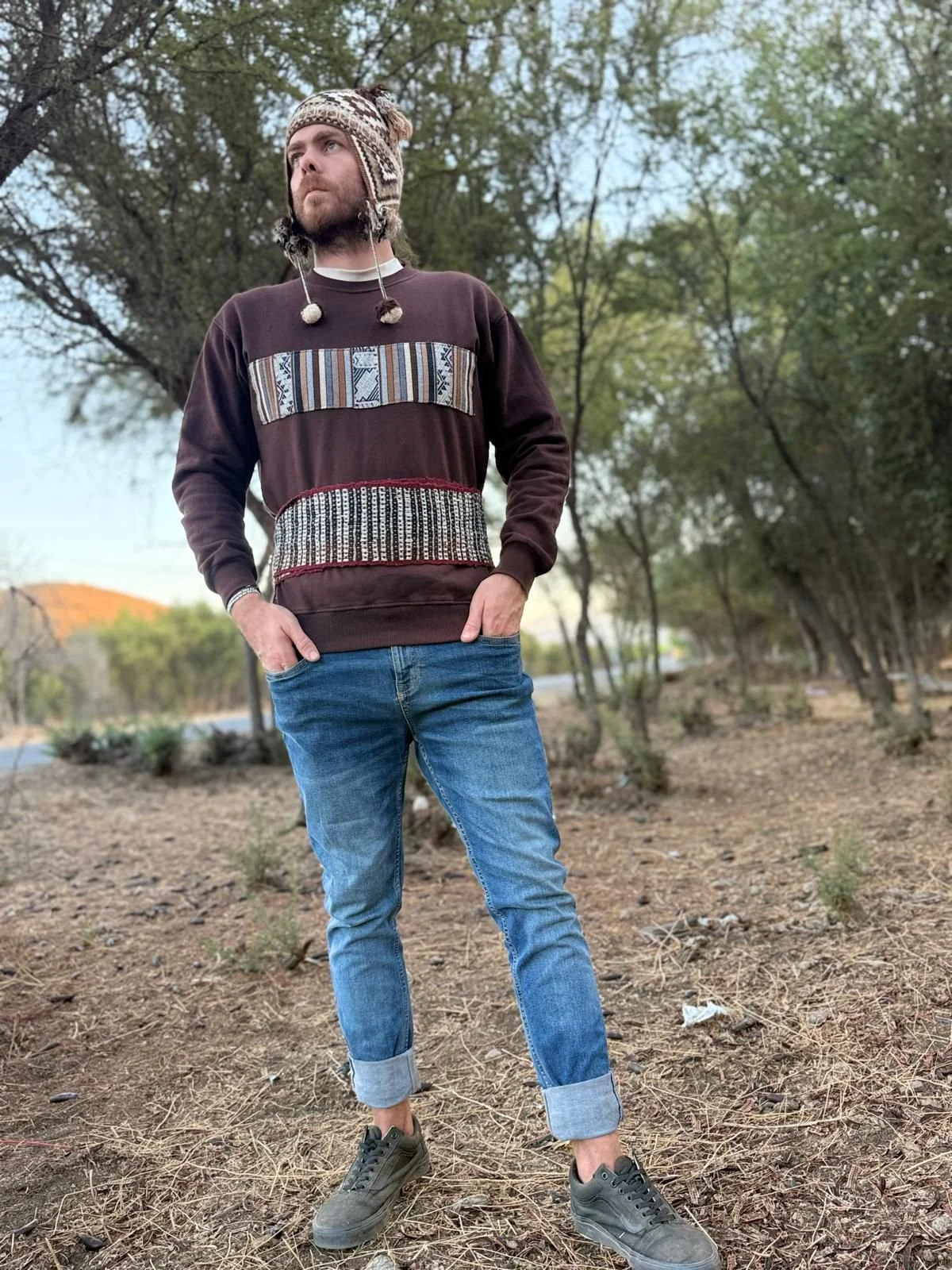
These handwoven Andean belts, traditionally known as Chumpis, are crafted in small quantities in collaboration with skilled artisans in Peru. Each belt carries its own distinct pattern and colour story, woven using techniques passed down through generations.
Chumpis have long been used in Andean communities as strong, durable waist sashes. Woven on traditional backstrap looms, they are known for their resilience and tight construction.
In many Andean regions, Chumpis are regarded as protective textiles. The geometric patterns are part of a traditional visual prayer connected to Andean cosmology and relationship with Pachamama (Mother Earth). When worn, they are associated with grounding, strength, and protection, especially during ceremony or meaningful gatherings.
We work directly with makers to ensure fair exchange and continuity of traditional craft. There is no mass production.
Details:
Material: Handwoven textile
Origin: Pisac Peru - Made By Mami Benita from Amarus Community 3600m above sea level (community connected to Qinsa Qocha)
Length: Approx 1.2 - 1.5m (generally wrap waist twice)
Width: Approx 10cm
Availability: Limited batch
Free shipping Australia-wide.
Processing time: 1–3 business days.
This Chumpi was sourced in May 2026, when we spent multiple days with Benita in her house.
Care Instructions:
Handle with respect. Hand wash gently in warm water and air dry flat. Avoid harsh detergents to preserve the integrity of the weave.
(First wash: Warm water with salt and hang directly in sun to protect the natural dyes)
Being handwoven using traditional methods, each Chumpi is one of a kind in its design and pattern.
Made in small quantities. What’s available now is limited, and restocks depend on the makers and timing of future batches.
This specific design represents the Andenes or Terraces - the place of abundance in the form of food and seen as a connection between humans, spirits and the mountains.
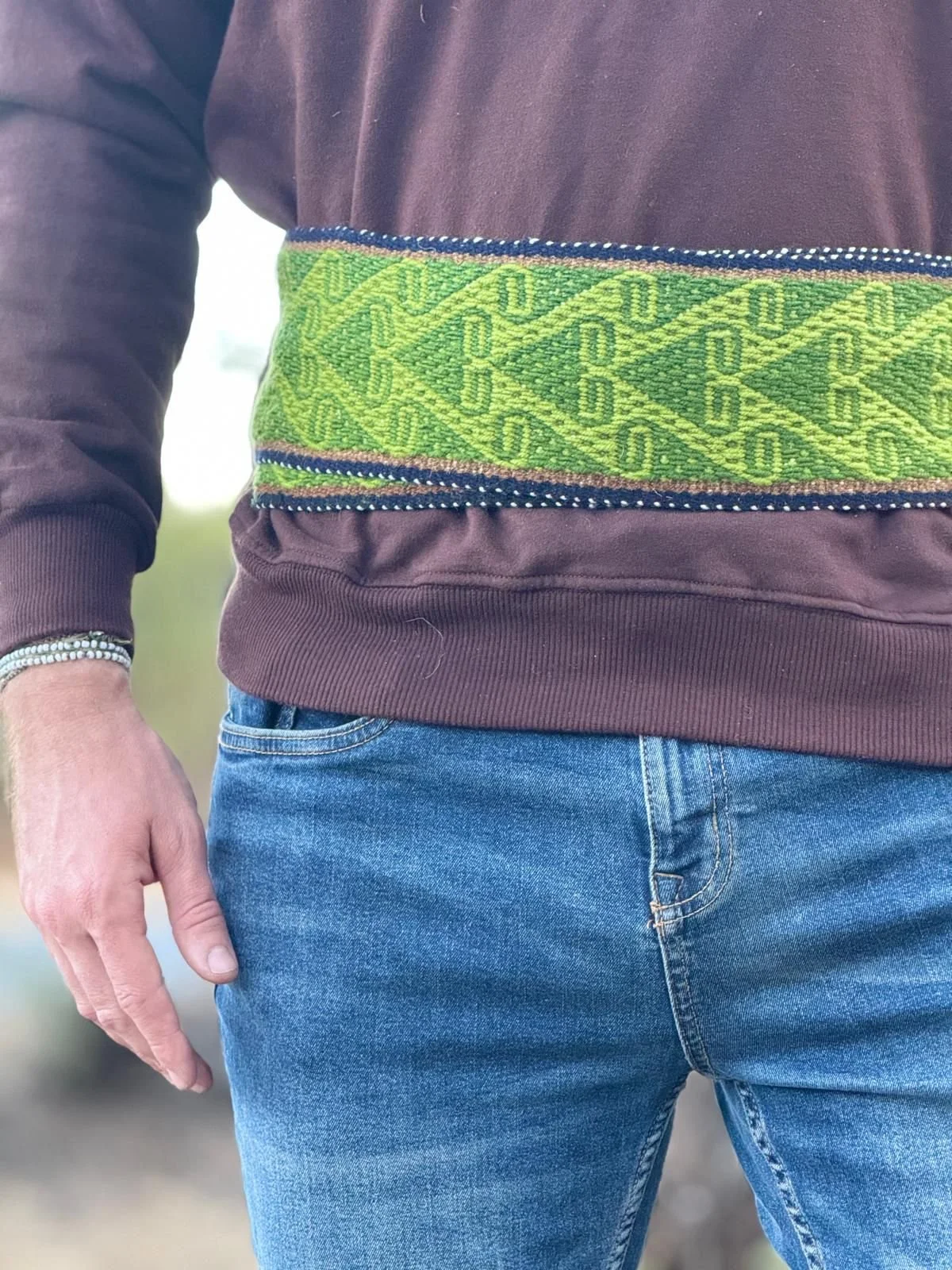
These handwoven Andean belts, traditionally known as Chumpis, are crafted in small quantities in collaboration with skilled artisans in Peru. Each belt carries its own distinct pattern and colour story, woven using techniques passed down through generations.
Chumpis have long been used in Andean communities as strong, durable waist sashes. Woven on traditional backstrap looms, they are known for their resilience and tight construction.
In many Andean regions, Chumpis are regarded as protective textiles. The geometric patterns are part of a traditional visual prayer connected to Andean cosmology and relationship with Pachamama (Mother Earth). When worn, they are associated with grounding, strength, and protection, especially during ceremony or meaningful gatherings.
We work directly with makers to ensure fair exchange and continuity of traditional craft. There is no mass production.
Details:
Material: Handwoven textile
Origin: Pisac Peru - Made By Mami Benita from Amarus Community 3600m above sea level (community connected to Qinsa Qocha)
Length: Approx 1.2 - 1.5m (generally wrap waist twice)
Width: Approx 10cm
Availability: Limited batch
Free shipping Australia-wide.
Processing time: 1–3 business days.
This Chumpi was sourced in May 2026, when we spent multiple days with Benita in her house.
Care Instructions:
Handle with respect. Hand wash gently in warm water and air dry flat. Avoid harsh detergents to preserve the integrity of the weave.
(First wash: Warm water with salt and hang directly in sun to protect the natural dyes)
Being handwoven using traditional methods, each Chumpi is one of a kind in its design and pattern.
Made in small quantities. What’s available now is limited, and restocks depend on the makers and timing of future batches.
This specific design represents The Heart (Corazon)
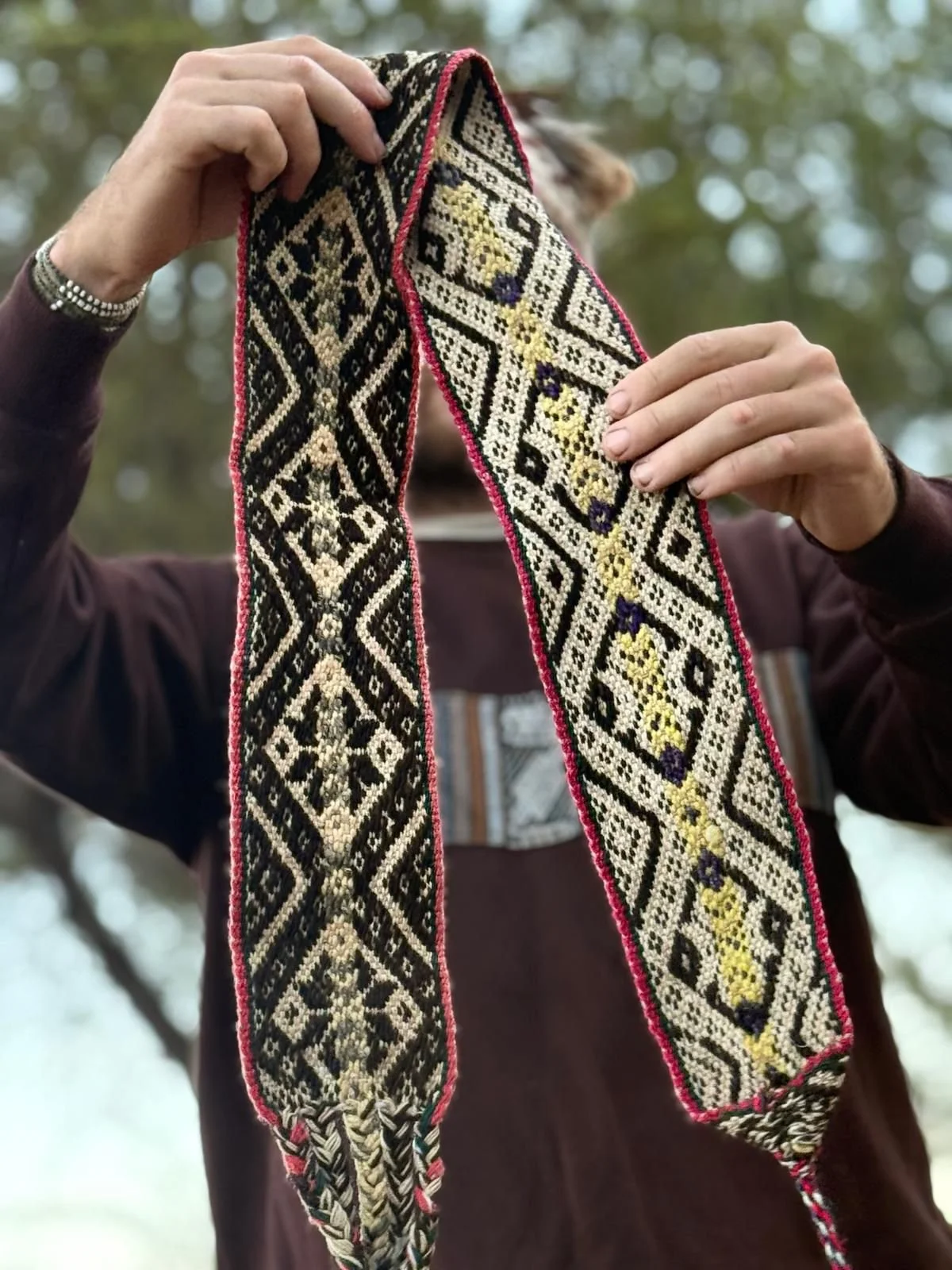
These handwoven Andean belts, traditionally known as Chumpis, are crafted in small quantities in collaboration with skilled artisans in Peru. Each belt carries its own distinct pattern and colour story, woven using techniques passed down through generations.
Chumpis have long been used in Andean communities as strong, durable waist sashes. Woven on traditional backstrap looms, they are known for their resilience and tight construction.
In many Andean regions, Chumpis are regarded as protective textiles. The geometric patterns are part of a traditional visual prayer connected to Andean cosmology and relationship with Pachamama (Mother Earth). When worn, they are associated with grounding, strength, and protection, especially during ceremony or meaningful gatherings.
We work directly with makers to ensure fair exchange and continuity of traditional craft. There is no mass production.
Details:
Material: Handwoven textile
Origin: Pisac Peru - Made By Mami Benita from Amarus Community 3600m above sea level (community connected to Qinsa Qocha)
Length: Approx 1.2 - 1.5m (generally wrap waist twice)
Width: Approx 10cm
Availability: Limited batch
Free shipping Australia-wide.
Processing time: 1–3 business days.
This Chumpi was sourced in May 2026, when we spent multiple days with Benita in her house.
Care Instructions:
Handle with respect. Hand wash gently in warm water and air dry flat. Avoid harsh detergents to preserve the integrity of the weave.
(First wash: Warm water with salt and hang directly in sun to protect the natural dyes)
Being handwoven using traditional methods, each Chumpi is one of a kind in its design and pattern.
Made in small quantities. What’s available now is limited, and restocks depend on the makers and timing of future batches.
This specific design represents the Heart of Mother Earth (Corazon De Pachamama)
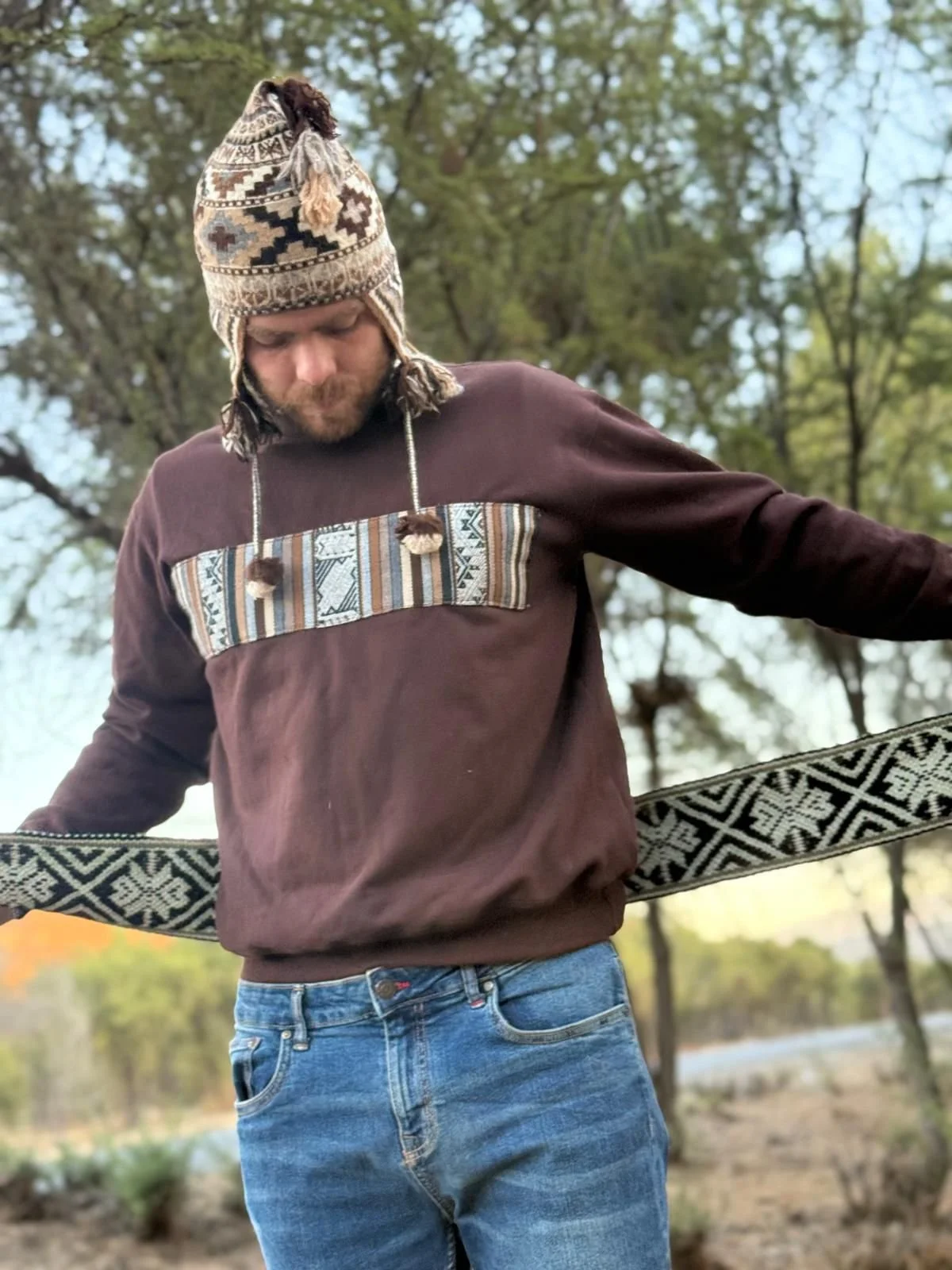
These handwoven Andean belts, traditionally known as Chumpis, are crafted in small quantities in collaboration with skilled artisans in Peru. Each belt carries its own distinct pattern and colour story, woven using techniques passed down through generations.
Chumpis have long been used in Andean communities as strong, durable waist sashes. Woven on traditional backstrap looms, they are known for their resilience and tight construction.
In many Andean regions, Chumpis are regarded as protective textiles. The geometric patterns are part of a traditional visual prayer connected to Andean cosmology and relationship with Pachamama (Mother Earth). When worn, they are associated with grounding, strength, and protection, especially during ceremony or meaningful gatherings.
We work directly with makers to ensure fair exchange and continuity of traditional craft. There is no mass production.
Details:
Material: Handwoven textile
Origin: Pisac Peru - Made By Mami Benita from Amarus Community 3600m above sea level (community connected to Qinsa Qocha)
Length: Approx 1.2 - 1.5m (generally wrap waist twice)
Width: Approx 10cm
Availability: Limited batch
Free shipping Australia-wide.
Processing time: 1–3 business days.
This Chumpi was sourced in May 2026, when we spent multiple days with Benita in her house.
Care Instructions:
Handle with respect. Hand wash gently in warm water and air dry flat. Avoid harsh detergents to preserve the integrity of the weave.
(First wash: Warm water with salt and hang directly in sun to protect the natural dyes)
Being handwoven using traditional methods, each Chumpi is one of a kind in its design and pattern.
Made in small quantities. What’s available now is limited, and restocks depend on the makers and timing of future batches.
This specific design represents the heart of mother earth (Corazon De Pachamama)
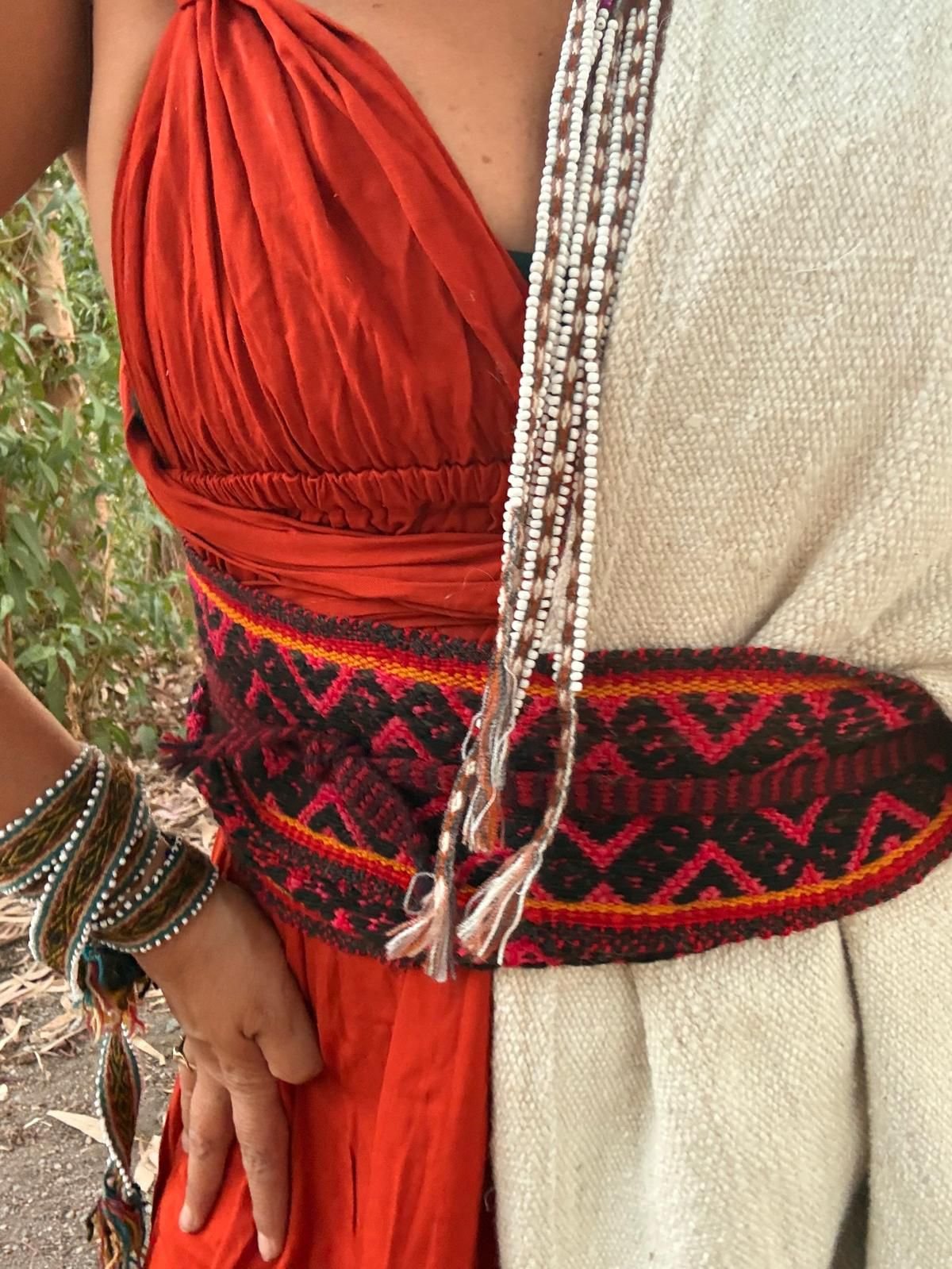
These handwoven Andean belts, traditionally known as Chumpis, are crafted in small quantities in collaboration with skilled artisans in Peru. Each belt carries its own distinct pattern and colour story, woven using techniques passed down through generations.
Chumpis have long been used in Andean communities as strong, durable waist sashes. Woven on traditional backstrap looms, they are known for their resilience and tight construction.
In many Andean regions, Chumpis are regarded as protective textiles. The geometric patterns are part of a traditional visual prayer connected to Andean cosmology and relationship with Pachamama (Mother Earth). When worn, they are associated with grounding, strength, and protection, especially during ceremony or meaningful gatherings.
We work directly with makers to ensure fair exchange and continuity of traditional craft. There is no mass production.
Details:
Material: Handwoven textile
Origin: Pisac Peru - Made By Mami Benita from Amarus Community 3600m above sea level (community connected to Qinsa Qocha)
Length: Approx 1.2 - 1.5m (generally wrap waist twice)
Width: Approx 10cm
Availability: Limited batch
Free shipping Australia-wide.
Processing time: 1–3 business days.
This Chumpi was sourced in May 2026, when we spent multiple days with Benita in her house.
Care Instructions:
Handle with respect. Hand wash gently in warm water and air dry flat. Avoid harsh detergents to preserve the integrity of the weave.
(First wash: Warm water with salt and hang directly in sun to protect the natural dyes)
Being handwoven using traditional methods, each Chumpi is one of a kind in its design and pattern.
Made in small quantities. What’s available now is limited, and restocks depend on the makers and timing of future batches.
This specific design represents the coca leaf, the sacred oracle and a master plant teacher in the Andes.
Traditional Andean Hat Band - Cintilla / Watana
Handwoven in the high Andes near Ocongate, in the shadow of the sacred Ausangate Mountain, these traditional hat bands carry the vibrant beadwork, symbolism, and weaving traditions the region is known for.
Worn traditionally around Andean hats, cintillas are far more than decorative adornments. They are expressions of identity, lineage, protection, and relationship with the mountains and ancestral traditions of the Andes.
Within the woven patterns, sacred Andean symbolism is often carried through the designs.
Depending on the piece, motifs include:
- The Condor
- The Butterfly
- The Hummingbird
- The Llama
- The Heart of Mother Earth
- Flowers
- The Puma
- The Snake
- The Serpent
For the peoples of the Ausangate region, these patterns are not simply aesthetic.
They carry memory.
Prayer.
Relationship.
The mountains, animals, rivers, and spirit world are woven directly into the textile language of the Andes.
Traditionally worn around ceremonial and everyday hats, these cintillas are believed to support grounding, clarity, protection, and connection while walking through life and ceremony.
Each piece is individually handmade and carries slight variations in weaving, beadwork, symbolism, and colour.
No two are exactly alike.
These are not factory-made adornments.