
 Image 1 of 1
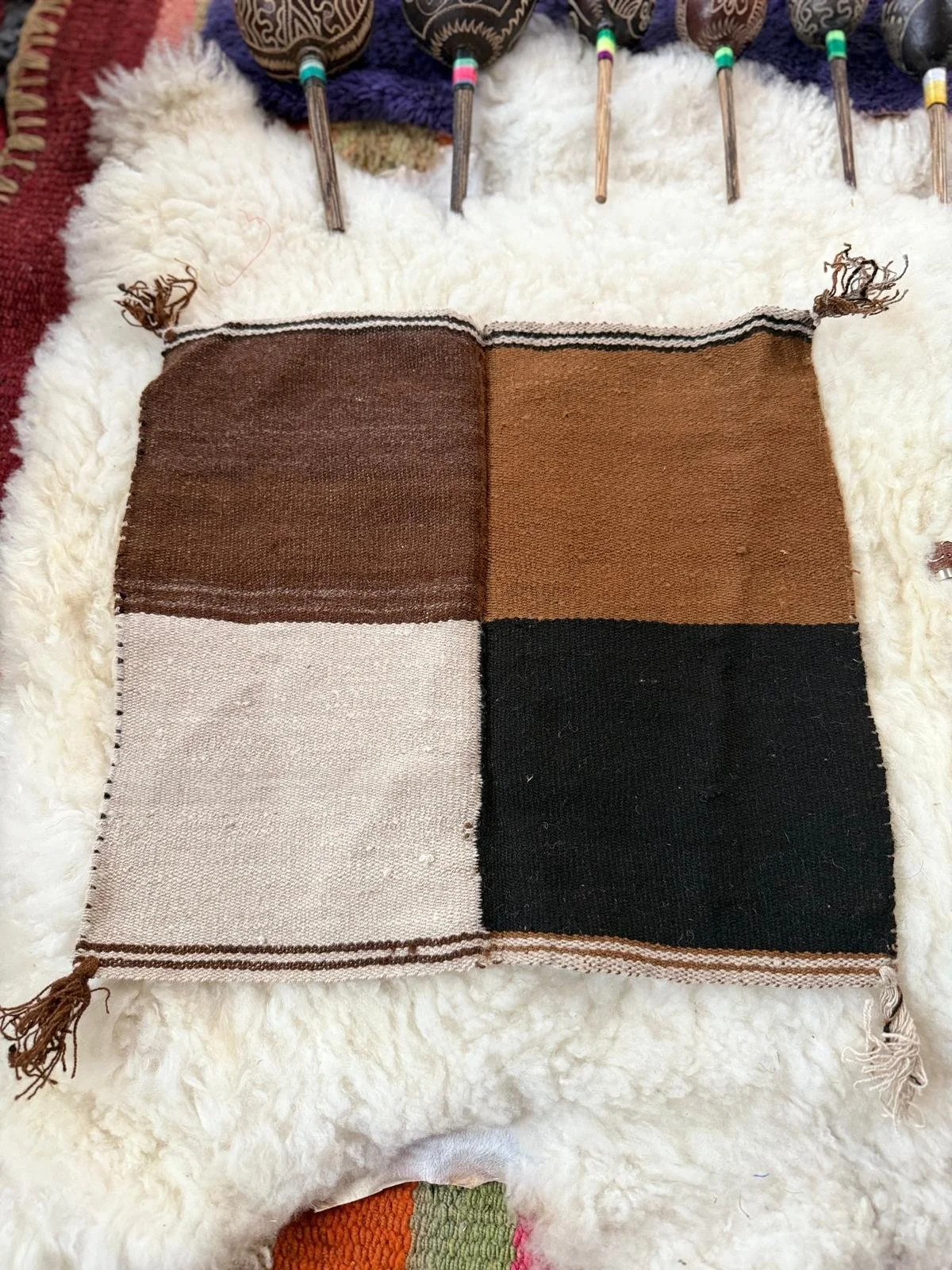
Handwoven near Ocongate in the Peruvian Andes, close to the sacred Ausangate Mountain, these traditional altar cloths embody the Andean principle of Tawa; the sacred “four.”
For the Q’ero peoples and surrounding mountain communities, Ausangate is far more than a mountain. It is an Apu a living spirit, protector, teacher, and powerful presence within Andean ceremonial life.
Within Andean cosmology, life is understood through relationship and balance.
The four directions.
The four elements.
The four regions of the Andean world.
Tawa represents wholeness; a field where all aspects of life exist in right relationship with one another.
These textiles are woven slowly and traditionally using ancestral methods passed down through generations.
The wool is gathered from alpacas raised within the mountain communities themselves, then hand-spun and naturally dyed using plants, minerals, and seeds from the Andes before being woven into these ceremonial pieces.
Every thread carries time, care, and lineage.
Traditionally, textiles of this kind are used as:
Mesa or altar cloths
Despacho foundations
Ceremonial textiles
Sacred carrying cloths
Prayer and meditation spaces
Simple in appearance, yet deeply intentional in symbolism and energy.
Represents the four directions and sacred balance
Connected to the wisdom of Tawantinsuyu; the four regions of the Andean world
Reflects harmony, integration, and ayni (right relationship)
Handwoven by Q’ero artisans using traditional methods
These are not mass-produced textiles.
They are woven prayers from the mountains of Peru carrying the stillness, warmth, and spirit of the Andes into the spaces they enter.
Handwoven near Ocongate in the Peruvian Andes, close to the sacred Ausangate Mountain, these traditional altar cloths embody the Andean principle of Tawa; the sacred “four.”
For the Q’ero peoples and surrounding mountain communities, Ausangate is far more than a mountain. It is an Apu a living spirit, protector, teacher, and powerful presence within Andean ceremonial life.
Within Andean cosmology, life is understood through relationship and balance.
The four directions.
The four elements.
The four regions of the Andean world.
Tawa represents wholeness; a field where all aspects of life exist in right relationship with one another.
These textiles are woven slowly and traditionally using ancestral methods passed down through generations.
The wool is gathered from alpacas raised within the mountain communities themselves, then hand-spun and naturally dyed using plants, minerals, and seeds from the Andes before being woven into these ceremonial pieces.
Every thread carries time, care, and lineage.
Traditionally, textiles of this kind are used as:
Mesa or altar cloths
Despacho foundations
Ceremonial textiles
Sacred carrying cloths
Prayer and meditation spaces
Simple in appearance, yet deeply intentional in symbolism and energy.
Represents the four directions and sacred balance
Connected to the wisdom of Tawantinsuyu; the four regions of the Andean world
Reflects harmony, integration, and ayni (right relationship)
Handwoven by Q’ero artisans using traditional methods
These are not mass-produced textiles.
They are woven prayers from the mountains of Peru carrying the stillness, warmth, and spirit of the Andes into the spaces they enter.