
 Image 1 of 2
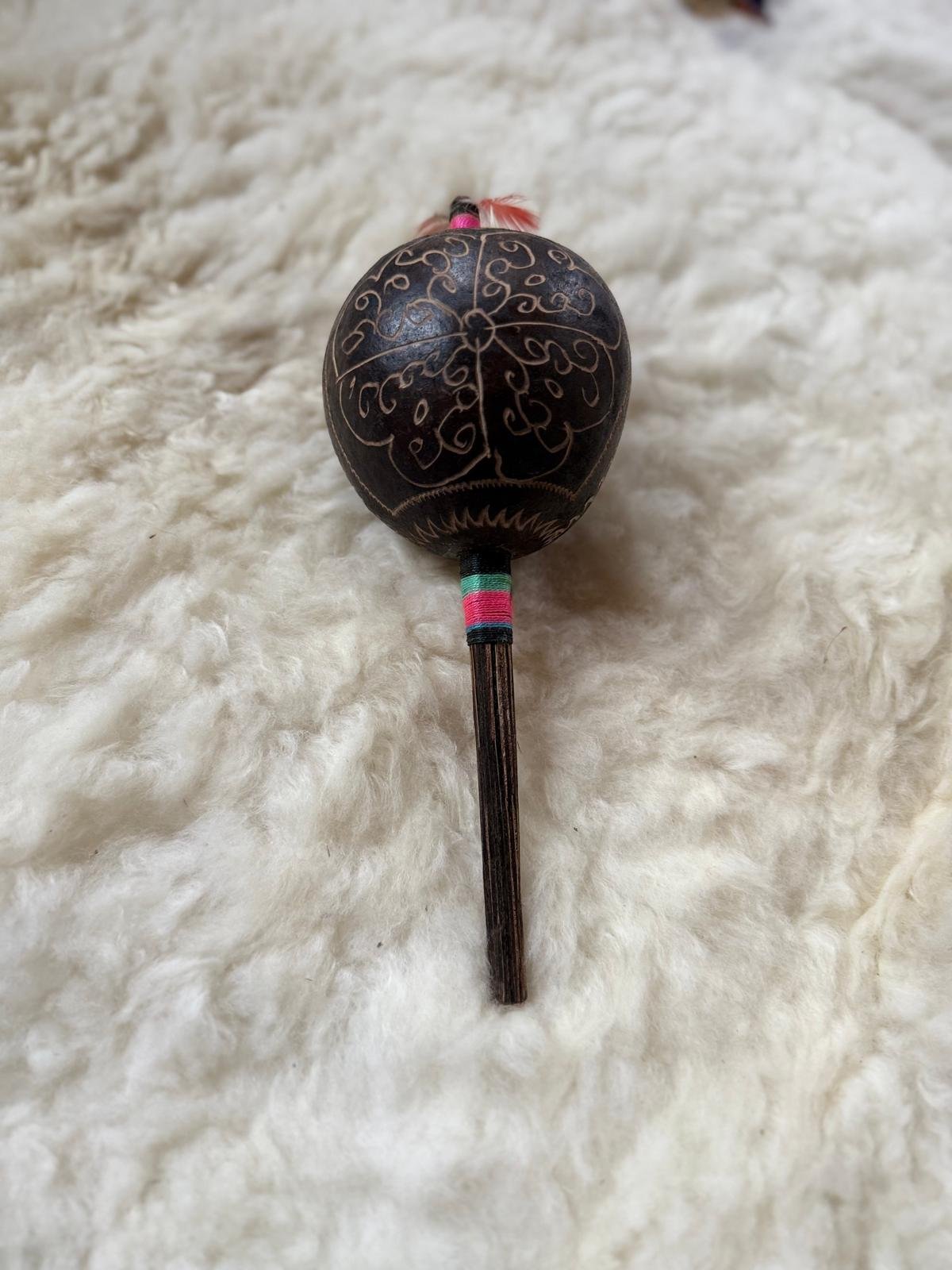 Image 2 of 2
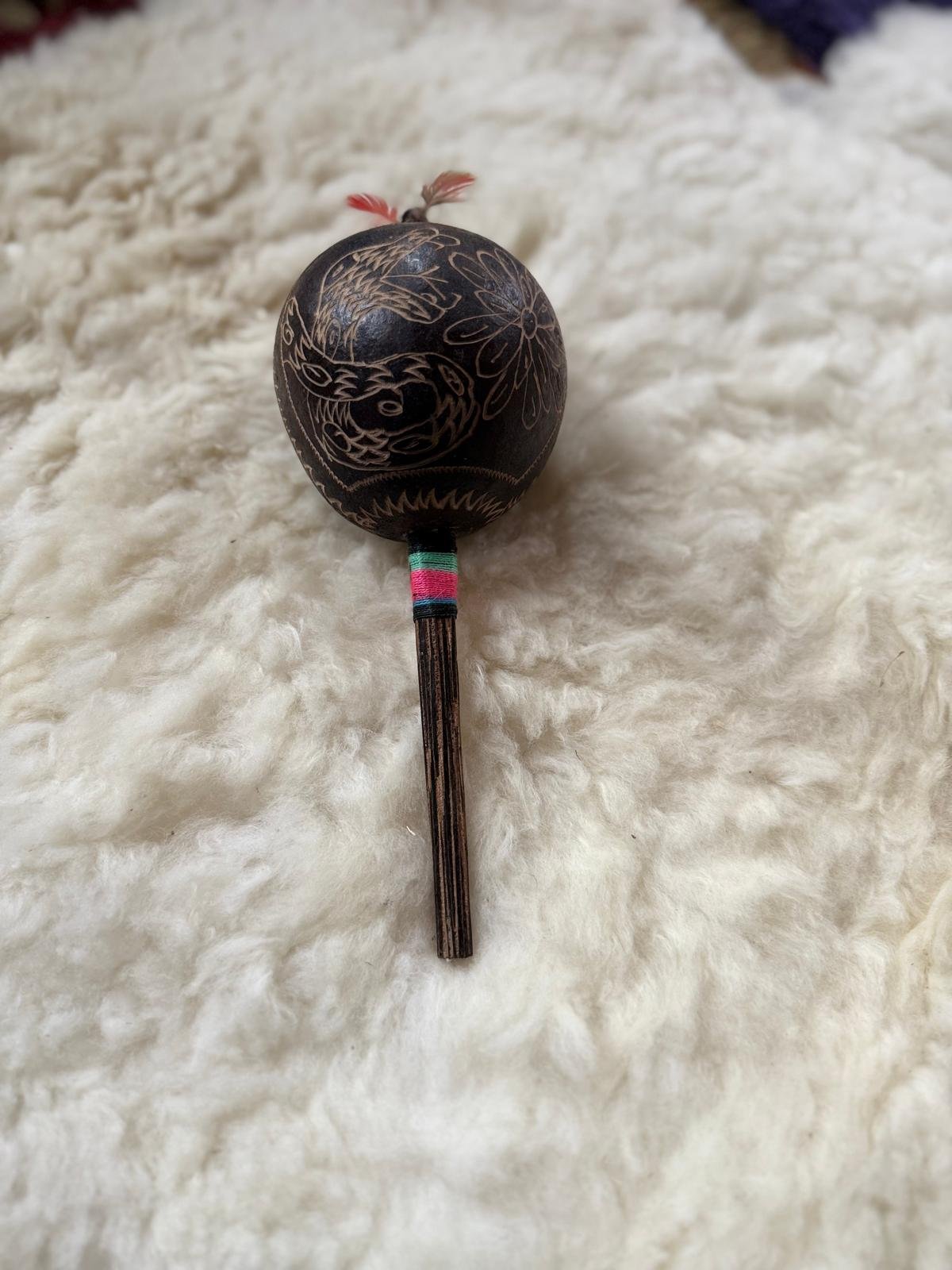
Handcrafted by Shipibo-Konibo artisans from the Peruvian Amazon, these traditional maracas are ceremonial instruments used for prayer, song, healing work, and energetic harmonisation.
For generations, rattles have played an important role in ceremonial traditions throughout the world. Within Shipibo culture, the rattle is often worked with alongside ícaros, sacred songs used during ceremony to guide, cleanse, protect, and bring balance to the space.
The patterns and designs found on these rattles are inspired by kené; the sacred geometric artwork traditional to the Shipibo-Konibo people. These energetic line patterns are deeply connected to visions, songs, and teachings received within ceremonial practice and are considered an important part of Shipibo cultural expression.
Totem / Design:
Snake, Flowers and the Sacred Vine.
The snake is the guardian of the underworld.
Flowers are the beauty in this world.
The sacred vine is the central ceremony to the jungle peoples culture.
When shaken gently, these rattles carry a soft, grounding, meditative sound.
Faster rhythms can awaken energy, sharpen focus, and help shift the feeling of a space. Traditionally, rattles are used to support song, prayer, cleansing, and connection within ceremonial settings; though they are equally beautiful for music, meditation, altar work, and personal practice.
Each rattle is handmade using materials native to the Peruvian Amazon rainforest.
The rattle head is traditionally crafted from a huingo seed pod and filled with small seeds that create its distinct sound.
The handle is made from chonta wood; a sacred and highly valued hardwood throughout the Amazon.
Some pieces also include natural feathers
Every piece is individually handmade, meaning variations in sound, patterning, shape, and colour are part of the beauty and uniqueness of each rattle.
These are not factory-made instruments.
They are ceremonial tools carrying the artistry, symbolism, and traditions of the Amazon and the Shipibo-Konibo people.
Handcrafted by Shipibo-Konibo artisans from the Peruvian Amazon, these traditional maracas are ceremonial instruments used for prayer, song, healing work, and energetic harmonisation.
For generations, rattles have played an important role in ceremonial traditions throughout the world. Within Shipibo culture, the rattle is often worked with alongside ícaros, sacred songs used during ceremony to guide, cleanse, protect, and bring balance to the space.
The patterns and designs found on these rattles are inspired by kené; the sacred geometric artwork traditional to the Shipibo-Konibo people. These energetic line patterns are deeply connected to visions, songs, and teachings received within ceremonial practice and are considered an important part of Shipibo cultural expression.
Totem / Design:
Snake, Flowers and the Sacred Vine.
The snake is the guardian of the underworld.
Flowers are the beauty in this world.
The sacred vine is the central ceremony to the jungle peoples culture.
When shaken gently, these rattles carry a soft, grounding, meditative sound.
Faster rhythms can awaken energy, sharpen focus, and help shift the feeling of a space. Traditionally, rattles are used to support song, prayer, cleansing, and connection within ceremonial settings; though they are equally beautiful for music, meditation, altar work, and personal practice.
Each rattle is handmade using materials native to the Peruvian Amazon rainforest.
The rattle head is traditionally crafted from a huingo seed pod and filled with small seeds that create its distinct sound.
The handle is made from chonta wood; a sacred and highly valued hardwood throughout the Amazon.
Some pieces also include natural feathers
Every piece is individually handmade, meaning variations in sound, patterning, shape, and colour are part of the beauty and uniqueness of each rattle.
These are not factory-made instruments.
They are ceremonial tools carrying the artistry, symbolism, and traditions of the Amazon and the Shipibo-Konibo people.